
Description
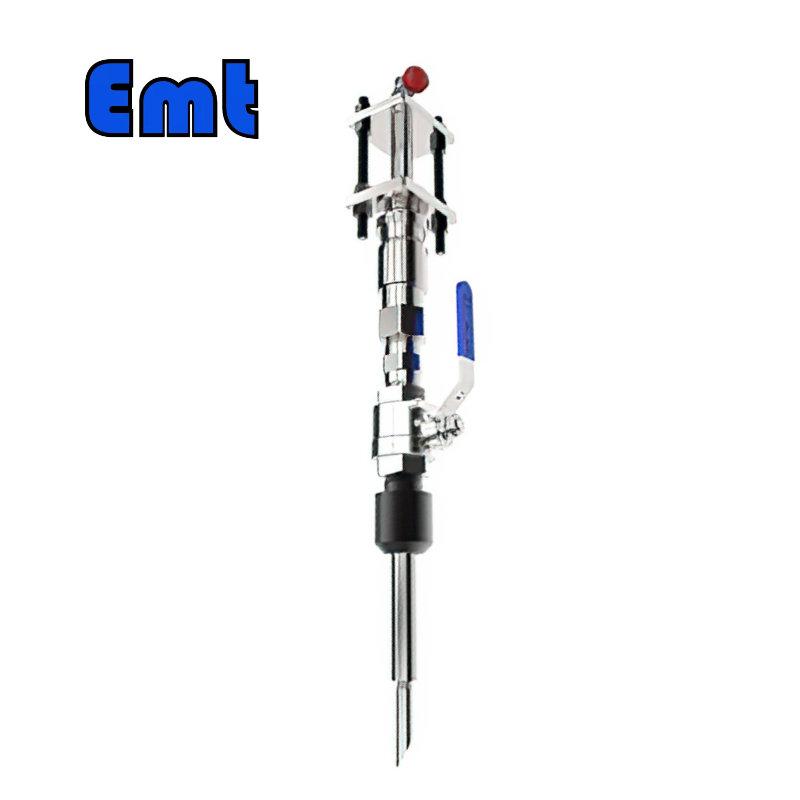
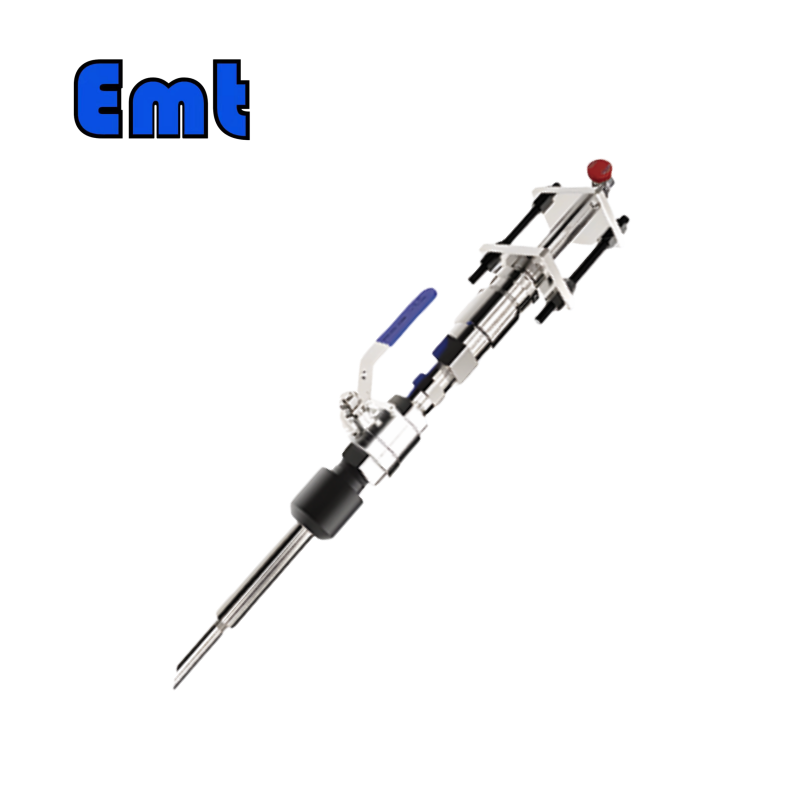
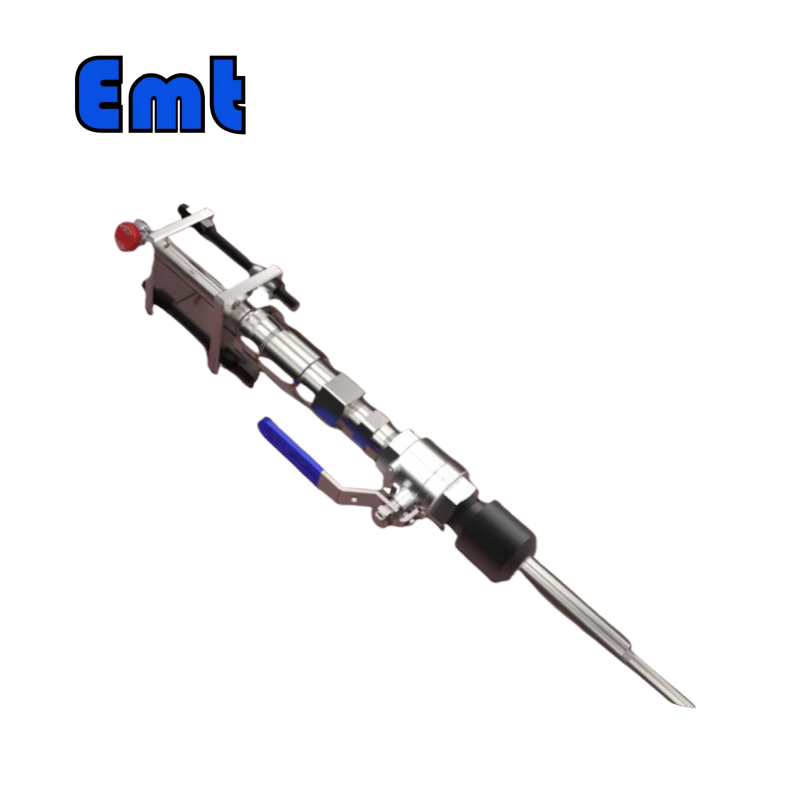
A retractable chemical injection quill that lets operators inject corrosion inhibitors, biocides, and process chemicals straight into a live pipeline — without shutting anything down. EMT’s retractable design means the quill assembly slides in and out through a full-bore access fitting under pressure. 2-inch ANSI flanged or welded base options. Rated from 150LB to 1500LB. Built in 316L wetted parts.
Technical Specifications
| Parameter | Specification |
|---|---|
| Model Series | EMT-CI Series |
| Access Fitting Connection | 2-inch Weldolet (Flareweld), 2-inch ANSI Flange (RF or RJ) |
| Body Material Options | Carbon Steel (standard), 316 Stainless Steel, 316L Stainless Steel, Duplex Stainless Steel |
| Internal Wetted Material | All internal wetted parts: 316L stainless steel |
| Operating Temperature | -20°C to 200°C (-4°F to 392°F) |
| Pressure Rating | 150LB, 300LB, 600LB, 900LB, 1500LB (up to 6000 PSI) |
| Quill Tube Sizes | 1/4 inch, 1/2 inch, 3/4 inch, 1 inch |
| Seal Material | Fluororubber or PTFE (Teflon) |
| Nozzle Types | Open-end (flat cut), Angled cut (45-degree bevel), Spray head (atomizing) |
| Nipple & Valve Size | 1/4 inch, 1/2 inch, 3/4 inch, 1 inch |
Typical Applications
- Corrosion inhibitor injection into crude oil, gas, and water pipelines
- Biocide dosing for microbial control in produced water systems
- Scale inhibitor injection at wellheads and gathering lines
- Methanol injection for hydrate prevention in gas transmission
- Oxygen scavenger and H₂S scavenger chemical delivery
Why Operators Pick EMT
When running a chemical treatment program, success often hinges on where and how the chemical enters the pipe. A proper retractable injection quill places it in the center of the flowing stream, not dribbling down the pipe wall.
EMT’s EMT-CI Series retractable injection quill uses a 2-inch full-bore access fitting — the same platform for corrosion coupon monitoring and sampling. One hot tap, one fitting, and you can swap between injection, monitoring, and sampling by changing the internal assembly — no second penetration needed.
The quill is a solid plug assembly with an integral holder, injection nut, and your choice of 1/4-inch, 1/2-inch, 3/4-inch, or 1-inch quill tube in 316L stainless steel (standard). The tip sits in the center third of the pipe for rapid chemical mixing.
Specs: -20°C to 200°C (-4°F to 392°F) temperature range; 150LB through 1500LB ANSI pressure classes (up to 6000 PSI). Sealing is Fluororubber (FKM) for general service or PTFE for aggressive chemicals. Body options: Carbon Steel (standard), 316 SS, 316L SS, or Duplex Stainless Steel. NACE MR0175 sour service compliance available on request.
The retractable design defines this product. You pull the entire quill assembly for inspection, cleaning, or nozzle swap while the line runs at full operating pressure. The double-block-and-bleed mechanism isolates the cavity; you bleed off trapped pressure and remove the quill through the full-bore body — no shutdown, no depressurization, no production loss.
For aggressive chemical programs, fixed injection points inevitably foul or corrode. A retractable quill solves this: pull, inspect, clean or replace wetted parts, and put it back — all live. For offshore platforms and remote stations, EMT’s retractable injection quill means maintenance happens on your schedule, not the pipeline’s.
Key Features
Hot-tap retractable design: Pull the quill assembly for inspection, cleaning, or nozzle swap without taking the line out of service. The double-block-and-bleed access fitting handles the pressure isolation.
Full material traceability: Every wetted component ships with MTR (Material Test Report) documentation. 316L, duplex, or custom alloys — you know exactly what’s touching your process.
Multiple nozzle geometries: Three standard quill tip profiles for different injection scenarios: flat cut for bulk liquid, 45-degree bevel for mixed-phase, spray head for gas-phase atomization.
Safety interlock on lock pin: The quill assembly can’t back out under pressure. An O-ring-sealed locking pin engages the plug body before the cover comes off, and the cover has to be fully seated before the lock pin releases.
Frequently Asked Questions
Q: Can I pull the quill without depressurizing the line?
A: Yes. That’s the whole point of a retractable injection quill. The access fitting has a full-bore design with a double block-and-bleed safety mechanism. You back the plug assembly out through the access fitting body, close the valve, bleed the cavity, and pull the quill — all while the line stays live at pressure.
Q: What nozzle type should I pick?
A: Depends on what you’re injecting. An open-end quill works fine for most liquid chemicals. If you need better dispersion — like atomizing a biocide into a gas stream — go with the spray head nozzle. Angled cut is the middle ground: decent atomization without the small orifice that could clog with dirty fluids.
Q: How do I pick between welded and flanged base?
A: Welded (flareweld) is the default for new construction — it’s permanently attached to the pipe and there’s no gasket to leak. Flanged base makes sense when you already have a 2-inch ANSI flange on the line, or if you want the option to remove the entire fitting later. Both use the same internal assembly.
Q: What materials can I get wetted parts in?
A: Standard is 316L stainless steel for all internal components. Duplex stainless steel is available for aggressive sour service. Seals come in fluororubber (FKM) or PTFE depending on your chemical compatibility and temperature range.
Q: Does this work for gas lines or only liquids?
A: Both. The injection quill design is the same — what changes is your pump sizing and nozzle selection. For gas transmission lines we recommend the spray nozzle type to get the best dispersion across the pipe cross-section.
Reviews
There are no reviews yet.