
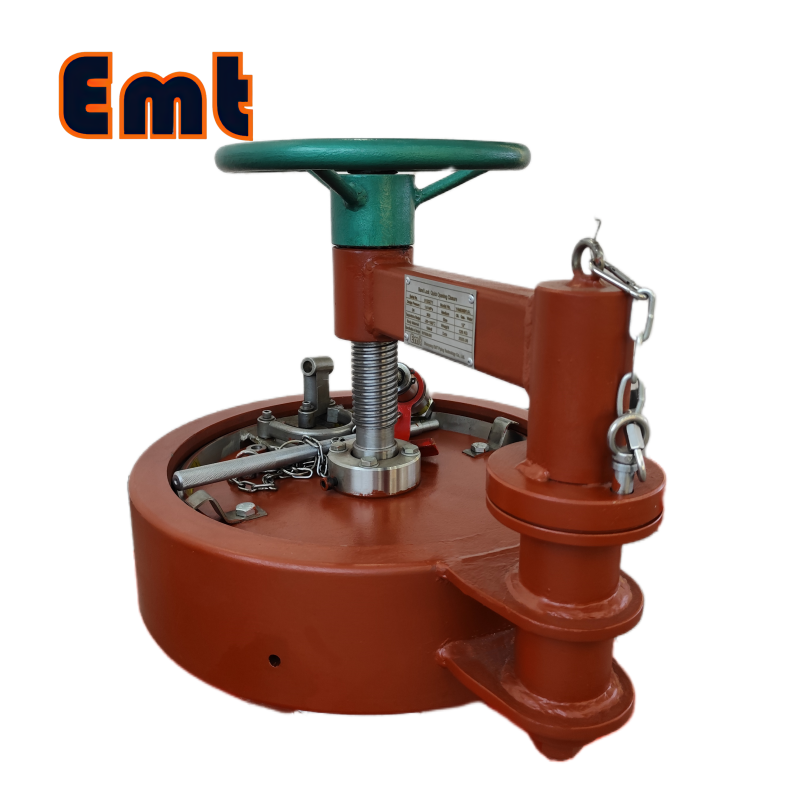
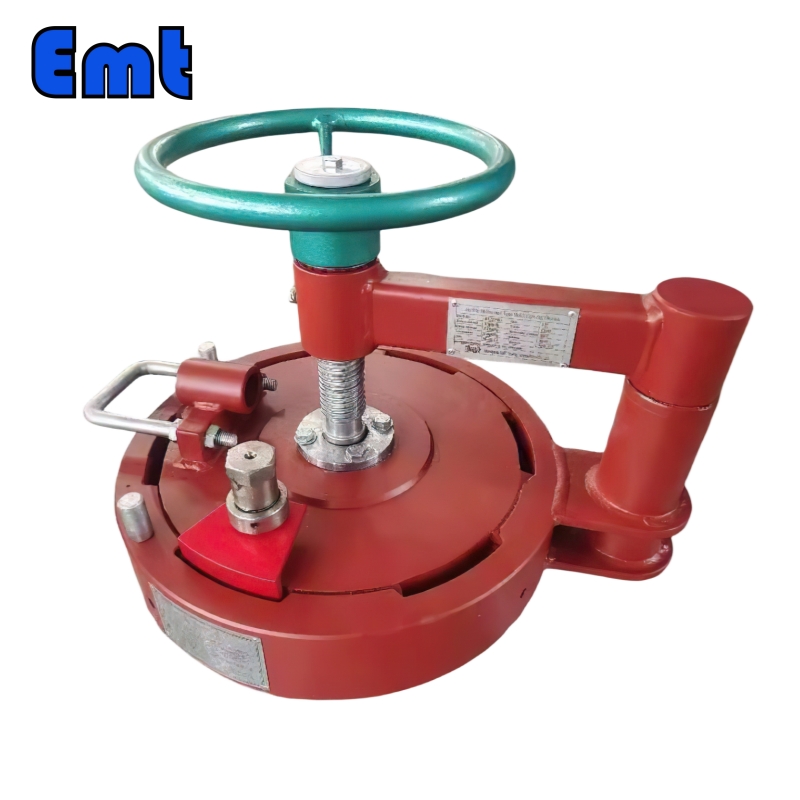

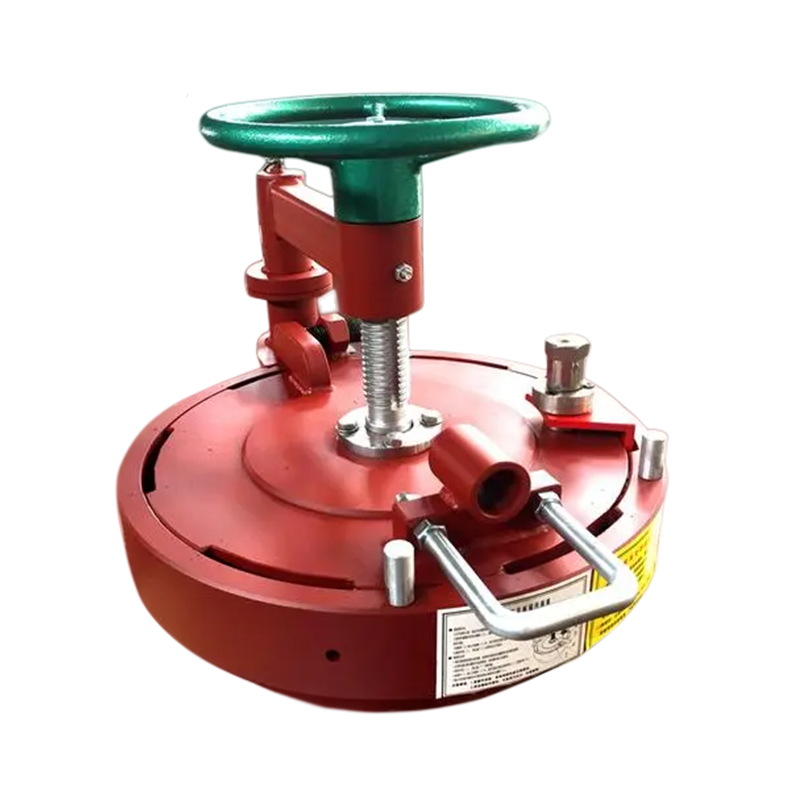
Description
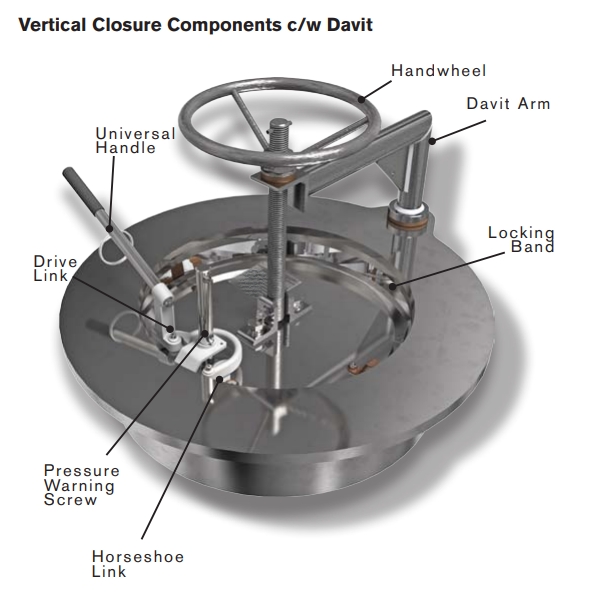
What Problem Does a QOC Solve?
A separator vessel needs internal cleaning every three months. With a bolted blind flange, your crew removes 24 bolts by hand — a 45-minute job that delays production and risks dropped tools in the confined space.
Q: How do I open a pressure vessel faster without risking safety?
A: A qoc quick opening closure swaps the bolt circle for a hinged door and locking ring. One technician opens it in under 60 seconds after depressurization. A built-in safety interlock blocks the door while pressure remains, meeting ASME Section VIII rules.
Technical Parameters
EMT manufactures three closure types across the full size and pressure range. Confirm your nominal diameter, wall thickness, and medium before ordering; we customize non-standard hubs on request.
| Parameter | Value |
|---|---|
| Nominal Diameter | DN100 – DN1800 |
| Design Pressure | Up to 40 MPa (5,800 psi) |
| Operating Temperature | -50 °C to 300 °C |
| Working Medium | Oil, natural gas, water |
| Material Options | 16Mn, A350 LF2, A105, SS304, SS316, F51, F53, F55, INCONEL 625, HASTELLOY C |
| Pipe Wall Thickness | 6 mm – 100 mm |
| Installation Orientation | Horizontal or vertical |
| Opening Direction | Left-hand or right-hand |
| Corrosion Allowance | 3 mm standard, customizable |
| Safety Interlock | Standard (blocks opening under pressure) |
Product Advantages
- One-minute access — A single operator opens or closes the door in under 60 seconds, versus 15–45 minutes for a bolted flange.
- Mandatory safety interlock — The device physically blocks the door while pressure remains, preventing the top cause of closure injuries.
- Three proven types — Bayonet, clamp, and lock-ring designs match any diameter from DN100 to DN1800.
- Full material traceability — Every closure ships with EN 10204 3.1 certificates and hydrostatic test records.
- Corrosion-ready alloys — Duplex F51/F53 and super duplex F55 resist chloride stress cracking in sour service.
Where Is a QOC Used?
- Upstream separators — Access internals for media change on oil and gas wells.
- Pig launcher and receiver stations — Open both launch and receive doors fast; see our Pig Launcher and Receiver.
- Refinery heat exchangers — Service knock-out drums and sieve vessels during turnarounds.
- Water treatment filters — Swap ion-exchange resin without flange bolt crews.
- Chemical plants — Handle acid/alkali media with HASTELLOY C grades.
- North Sea platforms — Low-temperature operation with lock-ring closures.
- Industrial gas storage — Service high-pressure buffer vessels beyond oil and gas.
About EMT
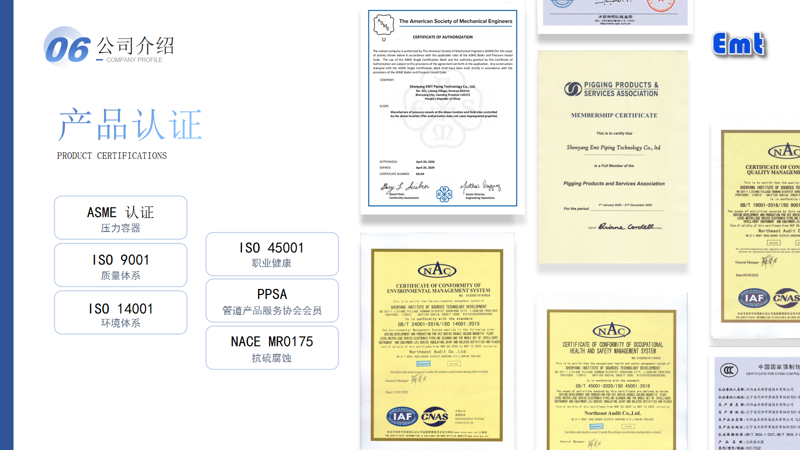
EMT is a Shenyang-based manufacturer integrating pressure vessel engineering, machining, and hydrostatic testing under one roof. We hold ASME U-Stamp certification and a Chinese Special Equipment Manufacture License for pressure vessels.
Frequently Asked Questions
Q: What is the difference between a bayonet and a lock-ring QOC quick opening closure?
A: A bayonet closure rotates teeth to lock and suits DN100–DN350 with the fastest cycle. A lock-ring closure expands a segmented ring radially, needs less force, and fits DN400 and above. Choose bayonet for small lines, lock-ring for large doors.
Q: Can a quick opening closure open under pressure?
A: No. Every EMT closure includes a safety interlock that physically blocks the door while pressure exceeds a safe threshold. The operator must fully depressurize and vent the vessel first. This meets ASME Section VIII Division 1 requirements.
Q: Which materials resist sour service corrosion?
A: EMT offers SS304 and SS316 for general service. Duplex F51 and super duplex F53/F55 resist chloride stress cracking. INCONEL 625 and HASTELLOY C handle high-temperature acids and oxidizing media in extreme environments.
Q: How fast is the opening cycle?
A: One operator opens a bayonet closure in under 30 seconds and a large lock-ring door in about one minute. A bolted blind flange of equal size needs 15–45 minutes. The closure cuts downtime on every access.
Q: Do you customize non-standard hubs?
A: Yes. EMT engineers closures to your vessel hub dimensions, flange rating, and bolt pattern. Send your drawings, and we design a closure that fits without adapters or field modification.
TL;DR
The EMT QOC quick opening closure is a pressure vessel door that opens in under one minute, not 45. It replaces bolted flanges with a hinged door, lock mechanism, and mandatory safety interlock. Three types cover DN100–DN1800 at pressures up to 40 MPa. ASME Boiler and Pressure Vessel Code Section VIII compliant.
Related Products
Reviews
There are no reviews yet.