
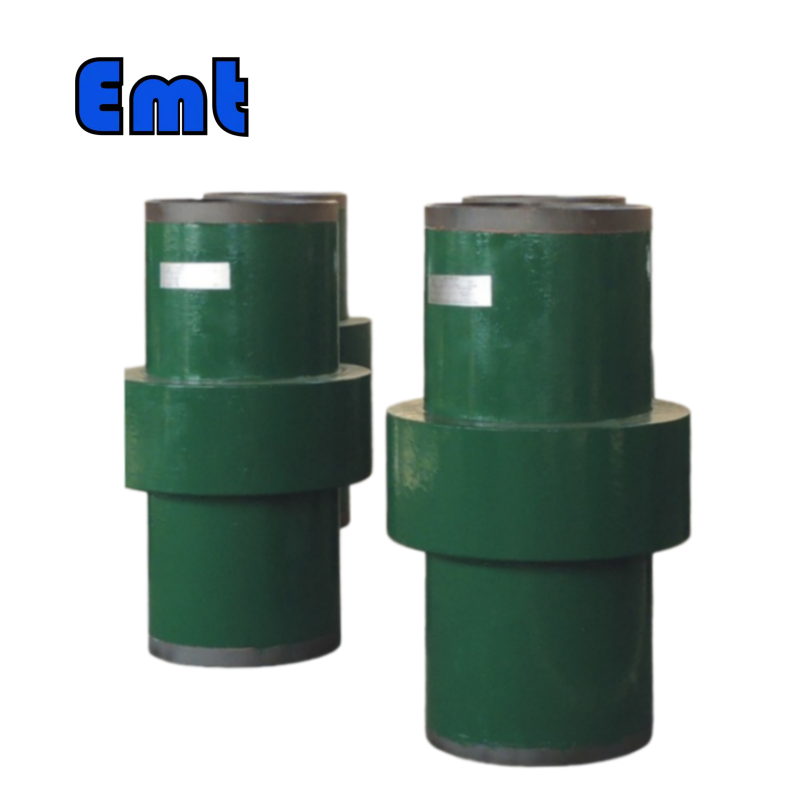
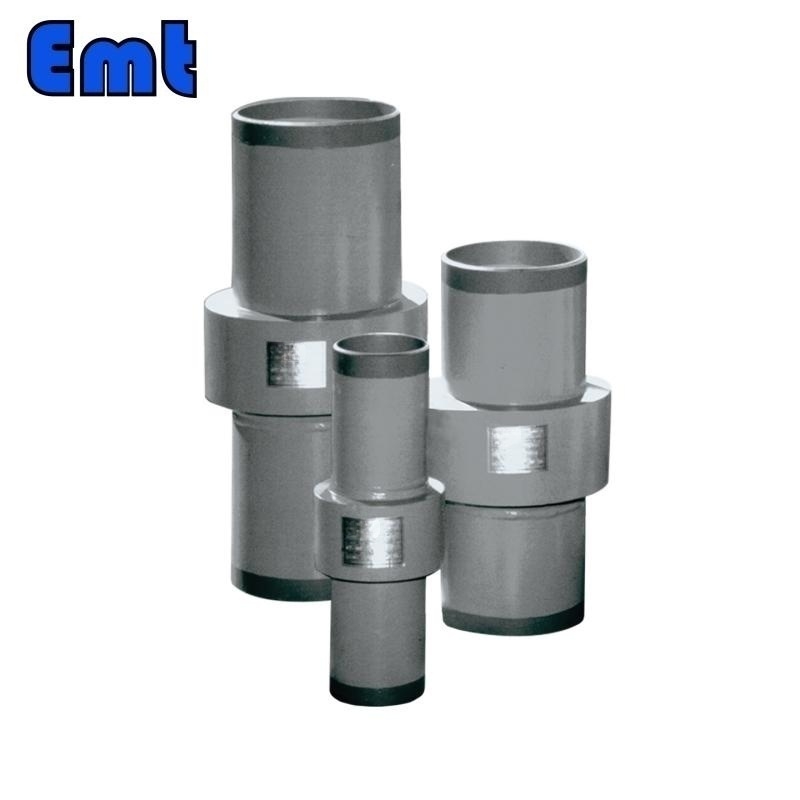
Description
What Are Monolithic Insulating Joints?
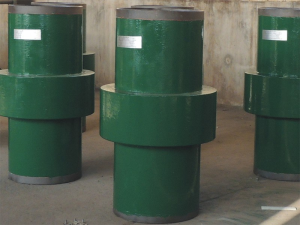
A monolithic insulating joint is a factory-built, one-piece fitting that electrically separates two pipeline sections. Operators also call it an isolation joint or a cathodic-protection (CP) isolation joint. Instead of bolting a flange pair around an insulating gasket, the joint fuses insulation and metal into a sealed unit.
The assembly welds directly into the line. As a result, it carries the same pressure and axial load as the host pipe. The design removes the weak points that plague bolted isolating flanges — loose bolts, moisture ingress, and gasket creep.
How Does a Monolithic Insulating Joint Work?
The joint stacks four functions into one forged body. First, an insulating ring and sleeve break the electrical circuit at the bore. Second, a sealing ring blocks product leakage across the insulation gap. Third, a cavity is filled with epoxy resin that locks the parts and absorbs load. Finally, the end hubs transfer axial and bending forces to the pipeline.
Because the insulation sits inside the forging, the joint resists creep and vibration. Therefore, the isolation resistance stays high for the full service life. EMT tests every unit for dielectric strength and leak tightness before shipment.
Why Choose a Monolithic Design?
A traditional isolating flange needs bolts, gaskets, and careful torque control. The monolithic joint needs none of that. The one-piece body gives four clear advantages:
- No bolt path.Fewer parts mean fewer leak paths and no retorque.
- Full bore.The insulated spool matches the pipe ID, so pressure drop is zero.
- Higher fatigue life.The forging absorbs bending and thermal movement as one member.
- Better CP performance.Stable insulation keeps each protection zone isolated.
In short, the monolithic design trades bolted complexity for a sealed, welded-in component.
Key Specifications
| Parameter | Specification |
|---|---|
| Nominal Size | DN15 – DN1200 (1/2″ – 48″) |
| Pressure Rating | ANSI 150# – 2500# (PN16 – PN420) |
| Body Material | Forged A105 / A350 LF2; 304 / 316 SS; F51 / F53 duplex |
| Linepipe Match | API 5L Grade B – X70 (ISO 3183) |
| Insulation Material | Engineered phenolic / PA6; G10 laminate |
| Sealing Element | NBR / FKM (Viton) O-rings + epoxy fill |
| Insulation Resistance | ≥ 10 MΩ at 1000 V DC (typ. > 25 MΩ) |
| Dielectric Test | 3 – 5 kV AC, no breakdown |
| Operating Temperature | −20°C to +120°C (LT −46°C / HT +200°C on request) |
| External Coating | PE / DIN 30670; FBE optional |
| Standards | API 5L, ASME B31.4 / B31.8, NACE SP0169, NACE MR0175, ISO 3183 |
| Certificates | EN 10204 3.1 / 3.2, ISO 9001 |
Where Should You Install Insulating Joints?
Place these isolation joints wherever you must control the cathodic protection boundary. At pipeline crossings, they separate your line from a crossing utility to stop interference. At plant tie-ins, they isolate the buried main from above-ground facility steel.
Additionally, install them between CP zones of different potentials. For instance, they protect a compressor station or a tank farm where stray current would otherwise short the system. Specifically, one joint at each boundary keeps every zone reading correctly.
Protect Pipeline Integrity
Cathodic protection only works when the protected metal forms one continuous, isolated circuit. The joint enforces that boundary. It stops foreign structures from stealing protective current and prevents your current from leaking into a neighbor’s line.
Therefore, the joint is a front-line element of pipeline integrity. Stable isolation means accurate CP surveys, fewer interference complaints, and longer coating life. Over time, this lowers whole-life cost and supports compliance with NACE SP0169.
Frequently Asked Questions
What is a monolithic insulating joint used for?
It electrically isolates two pipeline sections so each can run its own cathodic protection zone. Operators use it at crossings, plant tie-ins, and CP boundaries to stop stray-current interference.
How is it different from an isolating flange?
An isolating flange bolts two flanges around an insulating kit. The monolithic joint fuses the insulation and sealing into one forged, welded-in body. The monolithic type has no bolts, no retorque, and a longer fatigue life.
What pressure and size can EMT supply?
EMT supplies monolithic insulating joints from DN15 to DN1200 (1/2″–48″) with ratings up to ANSI 2500 (PN420). Larger sizes and higher temperatures are available on request with engineered validation.
What insulation resistance should I expect?
A finished joint typically shows above 25 MΩ at 1000 V DC and passes a 3–5 kV dielectric test. EMT confirms both values on every unit before release, with the result recorded on the material certificate.
Can it handle sour (H2S) service?
Yes. EMT builds sour-service joints to NACE MR0175 / ISO 15156 using low-hardness forgings and H2S-rated sealing elastomers. State the H2S partial pressure at enquiry so we select the correct material class.
Reviews
There are no reviews yet.