
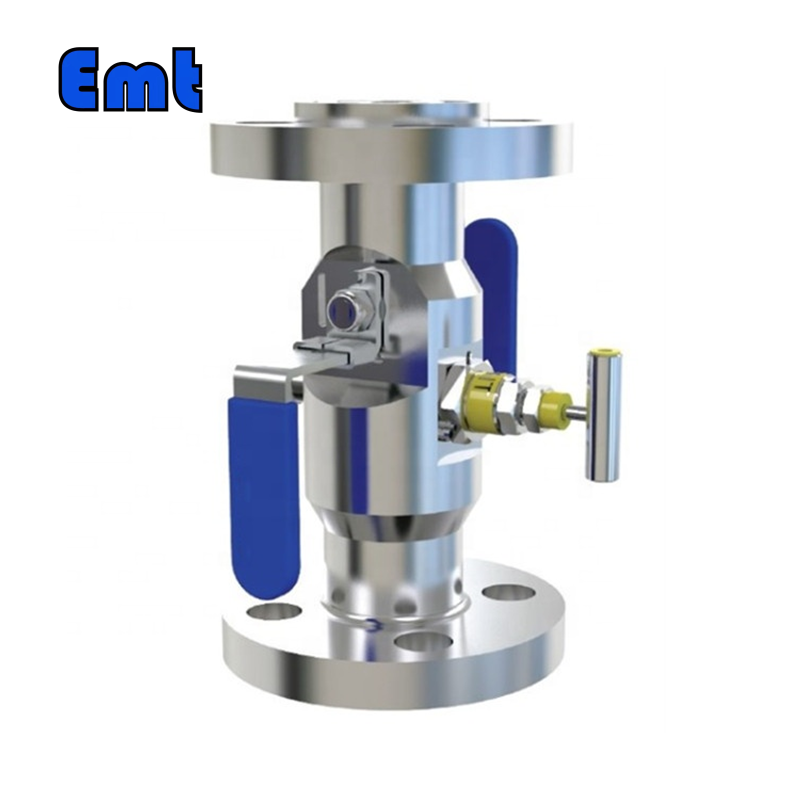
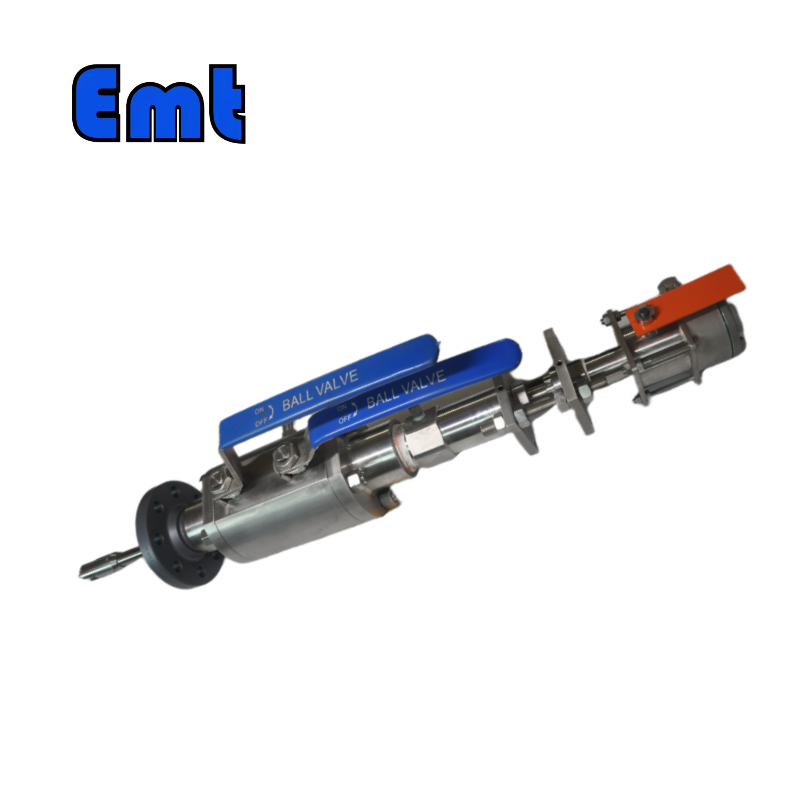
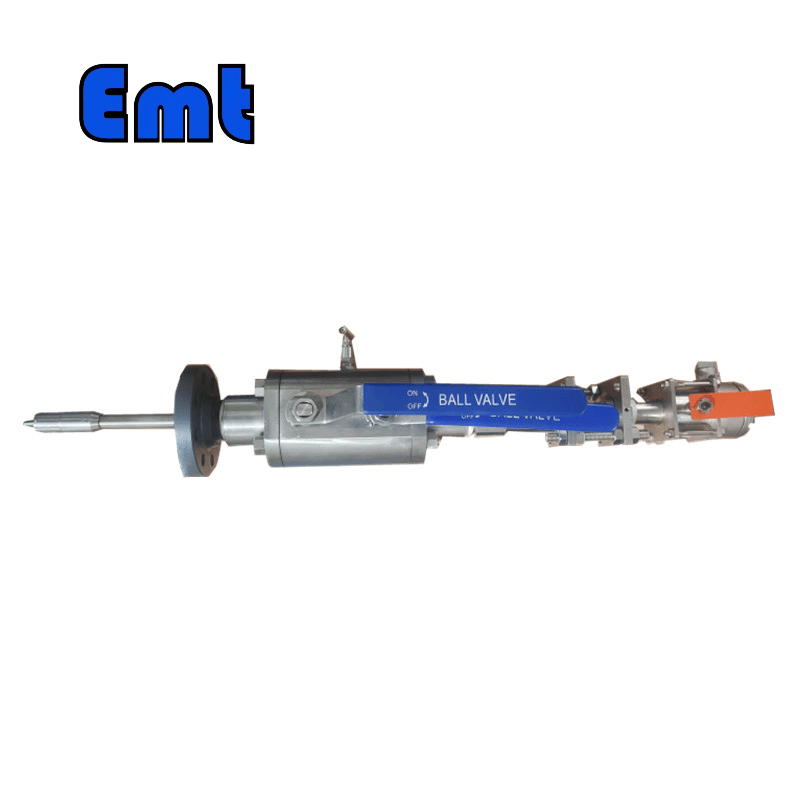
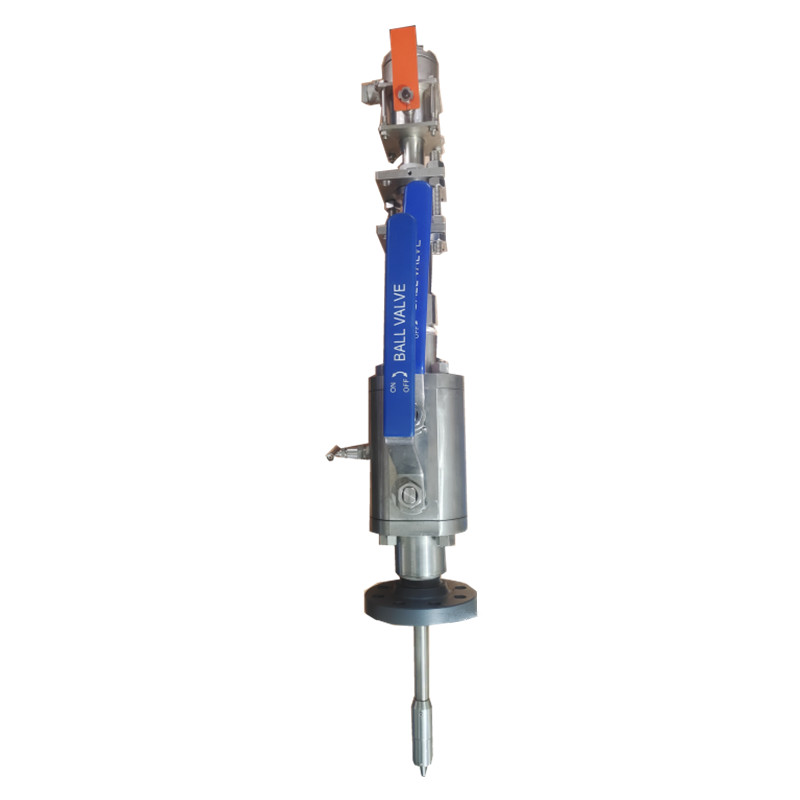
Description
Why Choose a Double Block and Bleed Valve?
A double block and bleed (DBB) valve gives you positive isolation on both sides of a pipeline in one assembly. Traditional setups need two separate block valves and a bleed valve between them. However, EMT’s DBB valve also carries an integrated pig signaller for live pig detection. As a result, you isolate and track pigs in a single compact body. Above all, you service the detector core under full pressure with no shutdown.
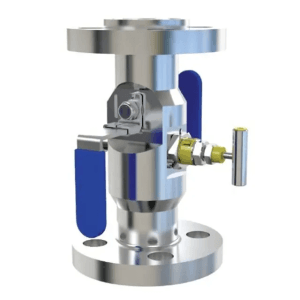
This design matters most especially in scenarios where safety entirely depends on verified isolation. To elaborate, once you close the valve, two independent seats work simultaneously to block both upstream and downstream pressure. After that, the bleed port automatically vents the cavity sandwiched between the two sealing seats. As a direct result, you are able to reliably confirm a complete zero-energy state in advance, before any personnel proceed to open the pipeline or extract the valve core.
Key Features
- One-Body Double Isolation — Two independent seats block pressure from both directions at once, so you isolate faster.
- Integrated Pig Signaller — A magnetic or mechanical indicator reads pig passage live without breaking containment or stopping flow.
- Ventable Cavity — The bleed port vents trapped fluid between the seats, which confirms a safe zero-energy state.
- Online Service — You remove the detector core under full pipeline pressure, which avoids costly shutdowns.
- API 6D Design — The valve meets API 6D pipeline-valve requirements, and seats are tested to the same standard.
- NACE MR0175 Material — Wetted parts use H2S-resistant alloy for sour oil and gas service.
- ASME U-Stamp Body — Pressure-retaining parts are built, hydrotested, and stamped in EMT’s own shop.
- Bidirectional Sealing — Both flow directions stay sealed, which suits reversing and pigging lines.
Technical Specifications
| Specification | Value |
|---|---|
| Product Type | DBB pipeline isolation valve with integrated pig signaller |
| Size Range | 2″ – 24″ (DN50 – DN600) |
| Pressure Class | Class 150 – 2500 (PN20 – PN420) |
| Temperature | -46°C to +200°C (-50°F to +392°F) |
| Body Material | A105, A350 LF2, F304 / F316 (NACE MR0175 option) |
| Connection | RF / RTJ flange, butt-weld |
| Sealing | Double block and bleed, bidirectional |
| Flange Standard | ASME B16.5 (DIN / JIS / GB on request) |
| Pig Signaller | Magnetic / mechanical, live local indicator |
| Design Standards | API 6D, ASME B16.34 |
| Sour Service | NACE MR0175 / ISO 15156 compliant |
| Certification | ASME U-Stamp, API 6D, NACE MR0175 |
| Maintenance | Core removable under pressure, no shutdown |
Double Block and Bleed vs. Other Isolation Designs
The table below clearly illustrates why a double block and bleed (DBB) valve outperforms alternative solutions for the majority of pipeline isolation tasks. For one thing, it delivers bidirectional isolation within a single valve body, whereas a single block and bleed (SBB) valve can only seal pressure from one direction. On the other hand, although a double isolation and bleed (DIB) valve equips every seat with a second independent sealing component to achieve complete system redundancy, it comes with a much higher price tag. Most importantly, compared with the traditional three-valve assembly, the DBB valve strikes an optimal balance among safety footprint and overall cost.
| Seals both sides | Yes (one seal set per seat) | One side only | Yes (double seals each side) | Yes (two valves) |
| Body count | 1 | 1 | 1 | 3 |
| Leak paths | Fewest | Few | Few | Most |
| Cavity vent | Yes | Yes | Yes | Yes |
| Online core service | Yes (DBB + signaller) | No | Yes | No |
| Space needed | Low | Low | Low | High |
| Best use | Isolation + pig tracking | Low-risk bleed | Critical double-seal duty | Retrofit / legacy |
Whenever you require verified bidirectional isolation together with live pig detection and hope to avoid the bulky footprint of a traditional three-valve assembly, you should opt for a DBB valve. By contrast, a DIB valve should only be specified for ultra-critical services demanding full dual-seal redundancy. For this reason, the majority of EMT customers establish DBB valves as their standard selection for routine tie-ins, meter runs, and pig launch/receive stations.
Applications & Use Cases
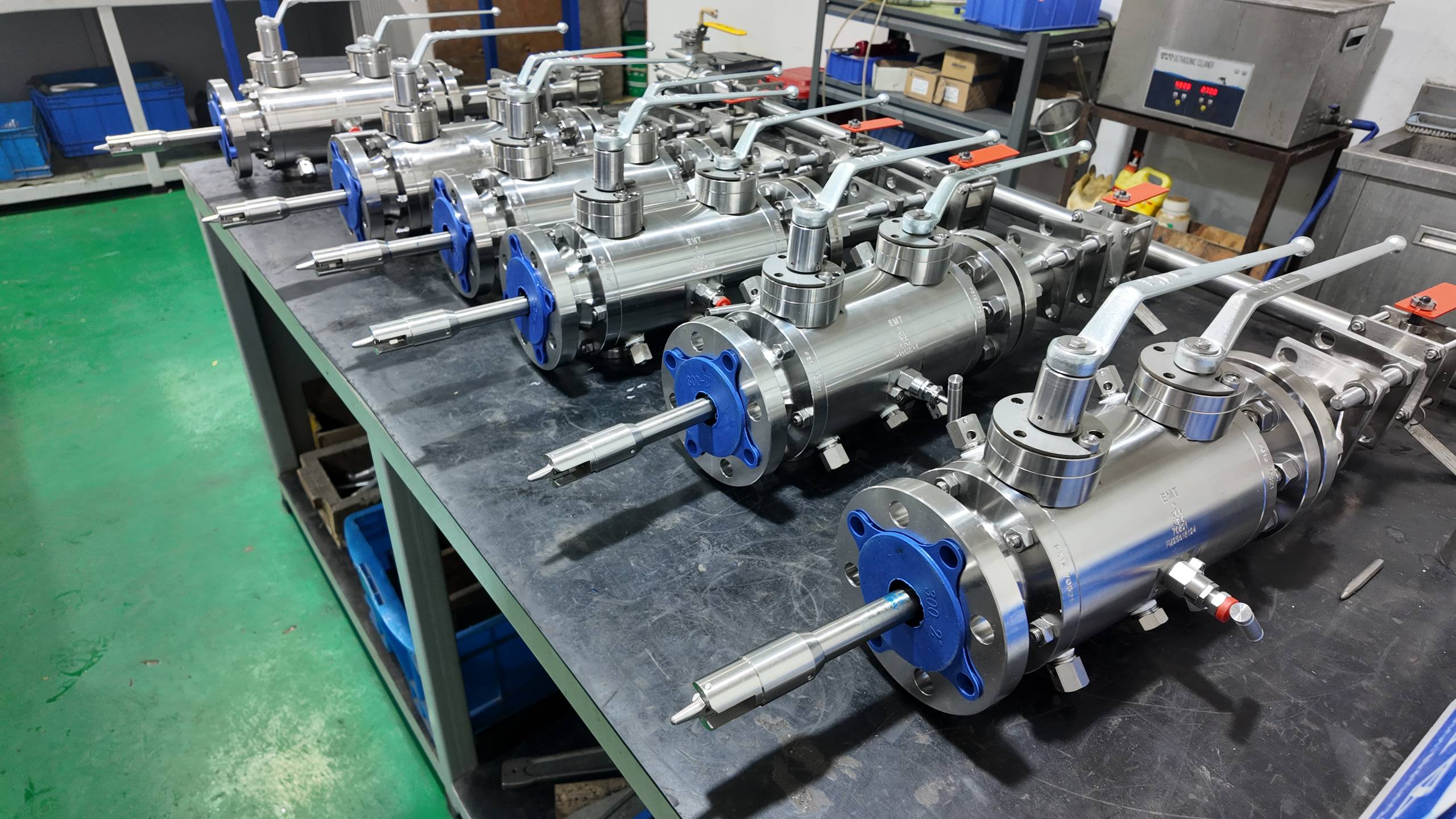
Our double block and bleed valve serves a wide range of applications including oil and gas transmission pipelines, refinery turnarounds, and wellhead manifolds. Beyond these core scenarios, it is also compatible with tank-farm transfer lines, pig launch and receive stations, and LNG terminals. To give a practical example, field operators regularly deploy this valve at custody-transfer meters to complete isolation and cavity bleeding prior to meter calibration. Furthermore, the valve performs reliably on sour-gas service lines, as its body material fully complies with NACE MR0175 standards. Taking all these merits together, you can rely on this single integrated valve to satisfy two critical inspection requirements simultaneously: passing safety audits and corrosion resistance assessments, alongside supporting full record-keeping for every pig run operation.
Frequently Asked Questions
Q: What is the difference between double block and bleed and double isolation and bleed?
A double block and bleed (DBB) valve uses two seats to block both flow directions; a double isolation and bleed (DIB) valve adds a second independent seal on each seat for full redundancy. Choose DIB for critical double-seal duty; DBB covers most isolation and pig-tracking jobs.
Q: Can the DBB valve be serviced without shutting down the pipeline?
Yes. The integrated pig signaller core is removable under full pipeline pressure. You vent the cavity through the bleed port, then unbolt the core. Flow continues without interruption, which avoids shutdown cost.
Q: Does your DBB valve suit sour service?
Of course.Wetted parts use NACE MR0175 / ISO 15156 compliant material for H2S and CO2 service. Low-temperature grades are available for LNG and LPG duty. EMT reviews each order for material compatibility.
Q: What standards and certifications does the valve meet?
Design follows API 6D and ASME B16.34; flanges follow ASME B16.5. Pressure-retaining parts carry ASME U-Stamp and meet NACE MR0175. Each unit is hydrotested and ships with test reports and certifications.
Reviews
There are no reviews yet.