
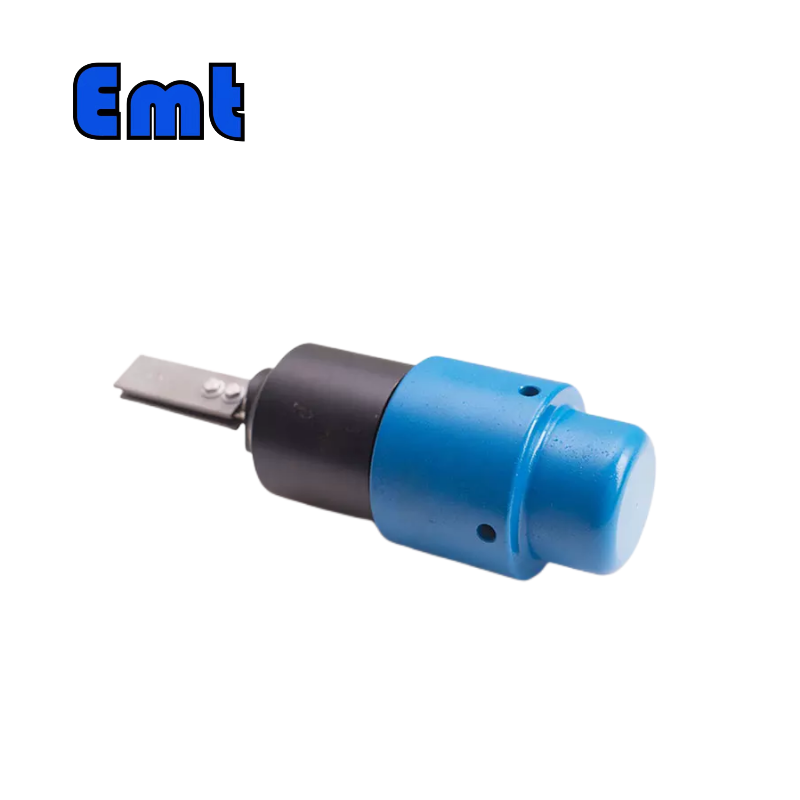
Description
1. What Is Corrosion Coupon?
As a Corrosion Coupon manufacturer, EMT supplies a corrosion coupon that is a device used to measure the corrosiveness of the medium inside a pipeline or vessel. Coupons are retrieved and replaced periodically, so the corrosion rate can be evaluated and the average service life of the pipeline or vessel estimated. This is one of the most common corrosion monitoring methods in industrial fields and laboratories. It is an offline monitoring method, used together with chemical injectors and chemical samplers.
2. What Are the Key Parameters?
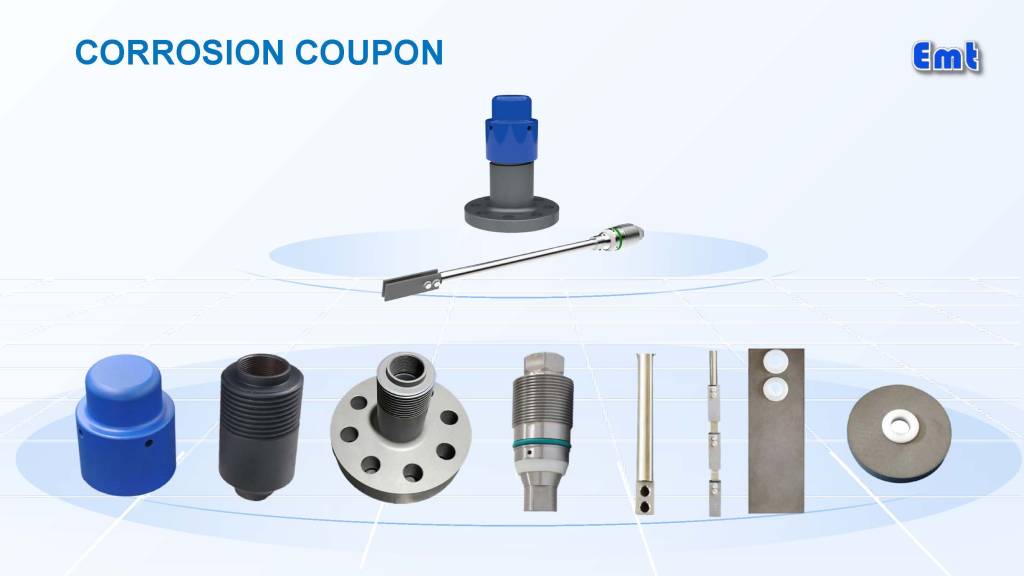
The coupon is a core sensing element of the corrosion monitoring system. It is normally a flush disc, set at the upper wall of the pipeline and level with the pipe, so it does not obstruct pigging. The coupon is fixed by an insert body and pushed with that insert into the pipeline fitting body. It works with corrosion probes to form a complete retrieval and monitoring system. EMT supplies double-acting hydraulic retrieval tools, so coupons can be installed or retrieved safely while the line is under pressure.
The coupon surface is usually blast cleaned to SA 2.5, with a typical grit of 120 mesh. The thinnest coupon can reach 1.6 mm. Customers need to stamp a serial number for traceability. The attachment behaviour of the test medium also helps determine the pigging cycle. Custom requirements, such as grit finer than 120 mesh or longer holders, involve outsourcing and extra cost. For SS316, engraving the weight costs more than leaving it unengraved, and the price is calculated by material and processing requirements.
| Parameter | Value | Note |
|---|---|---|
| Product type | Flush disc corrosion coupon | Set level with the pipe wall |
| Mounting position | Upper wall of pipeline | Does not obstruct pigging |
| Fixing method | Insert body | Pushed into the pipeline fitting body |
| Surface treatment | Blast cleaned to SA 2.5 | Typical grit 120 mesh |
| Minimum thickness | Down to 1.6 mm | Thinnest coupon |
| Material | SS316 among available materials | Engraved weight costs more |
| Traceability | Customer-stamped serial number | For tracking each coupon |
| Retrieval | Double-acting hydraulic retrieval tool | Install or retrieve under pressure |
| Custom options | Finer grit, longer holders | Outsourced, extra cost |
| System partners | Chemical injector, chemical sampler, corrosion probe | Complete monitoring system |
3. How Does It Work? + Where Should You Use It?
The coupon is made from the same or a similar material as the environment being monitored. It is exposed to the process medium, then retrieved and replaced on a regular schedule. By measuring its mass loss or thickness change, the corrosion rate is calculated. This method is simple, economical and intuitive, which is why it is widely used in corrosion monitoring systems across the oil and gas, petrochemical and water treatment industries.
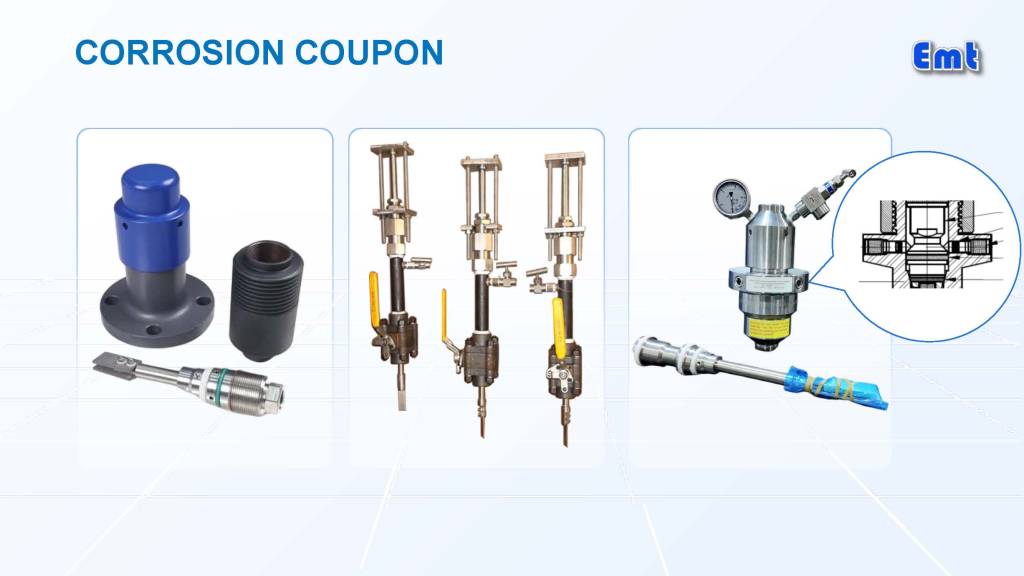
Coupon data is not only used to assess material durability and monitor corrosion status, but also combined with corrosion control measures to verify the effect of anti-corrosion treatment and support maintenance decisions. Because the coupon is an offline monitoring method, it is typically used alongside chemical injectors and chemical samplers. In operation, the coupon is fixed on its holder, pushed into the pipeline fitting body, and left in the flowing medium. When the exposure period ends, the double-acting hydraulic retrieval tool removes the coupon safely while the pipeline remains under pressure.
A new coupon is then installed in its place. Typical use scenarios include oil and gas pipelines, vessels, petrochemical process lines and water treatment systems where the corrosiveness of the medium must be tracked over time. The attachment characteristics of the medium on the coupon surface can also indicate the appropriate pigging cycle, so operators can plan cleaning runs before deposits build up. Serial numbers stamped on each coupon allow the corrosion history of a specific location to be traced across successive exposure periods. This makes the coupon a direct and economical way to estimate the average service life of a pipeline or vessel.
4. Why Choose This Design?
- Flush disc design sits level with the pipe wall and never blocks pigging.
- Blast cleaning to SA 2.5 gives a consistent, repeatable test surface.
- Double-acting hydraulic retrieval tools allow safe coupon changes under pressure.
- Serial number stamping lets you trace corrosion history at each location.
- Coupons integrate with EMT chemical injectors, samplers and corrosion probes.
5. Who Is EMT and Why Trust Us?
EMT is an oil and gas pipeline equipment manufacturer serving the emt-pipe.com platform. We produce corrosion coupons, holders, chemical injectors, chemical samplers, corrosion probes and hydraulic retrieval tools as one coordinated corrosion monitoring system. Because we manufacture the coupon, the insert body and the retrieval tool together, the fit and the retrieval sequence are controlled by one supplier instead of several. Our manufacturing is backed by the ASME U Stamp, so pressure-containing parts are built and documented to recognised code requirements. Our products also follow ASME, NACE and API conventions for corrosion monitoring practice. We also attend industry exhibitions, where we present our coupon, probe and injection equipment to pipeline operators and inspection teams.
FAQ
What is a corrosion coupon used for?
A corrosion coupon measures the corrosiveness of the medium inside a pipeline or vessel.
Can EMT coupons be installed while the pipeline is under pressure?
Yes.
What materials and surface finishes are available?
SS316 is a common coupon material, and the surface is normally blast cleaned to SA 2.5 with a typical grit of 120 mesh.
Related Products
- Corrosion Probe — online monitoring element used alongside coupons.
- Chemical Injector — injects chemicals into the line for corrosion control.
- Chemical Sampler — collects fluid samples for corrosion analysis.
Reviews
There are no reviews yet.