
Description
What Is Pipeline Pig Detector?
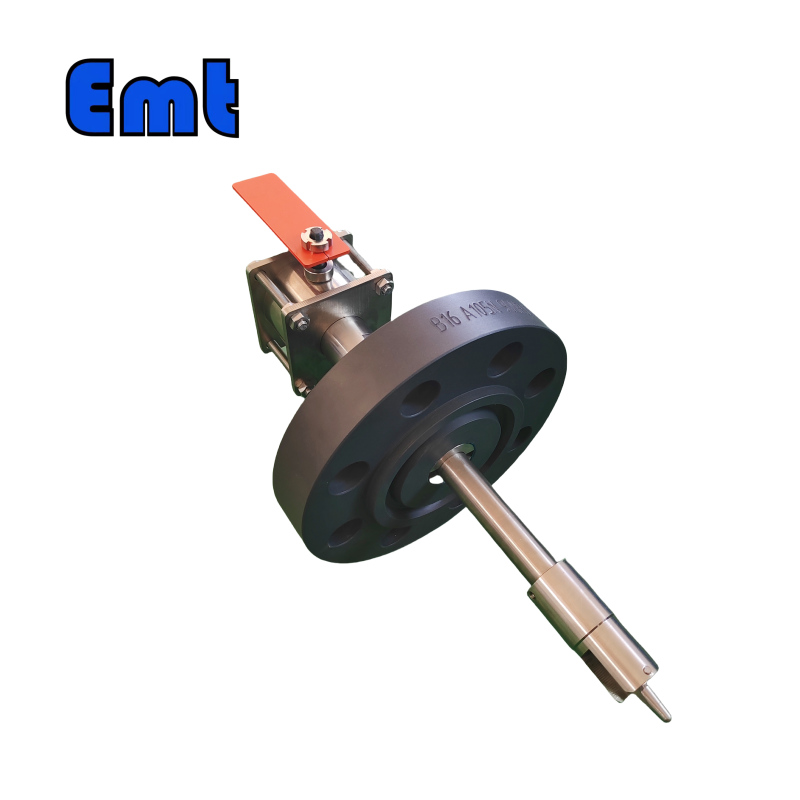
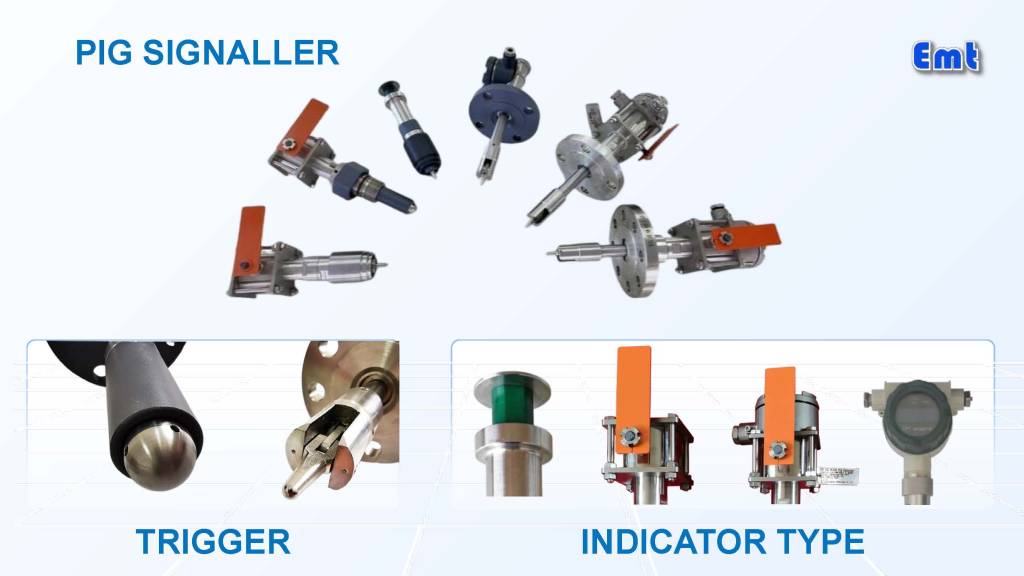
As a pipeline pig detector manufacturer, EMT supplies pig signallers that confirm whether a pipeline pig has passed a fixed point inside a pipeline. The device installs at key nodes such as pig launcher and receiver stations, where operators need positive confirmation of pig movement. EMT offers two families: intrusive pig indicators, which contact the pig directly, and non-intrusive pig signallers, which detect passage without penetrating the bore. Both indicate passage through an electrical signal, a manual reset flag, or a digital display head. The CGQ-1 non-intrusive ultrasonic pig signaller detects, indicates, and records pig passage at the installation point in oil and gas pipelines. Units are commonly used together with quick open closures in pigging systems.
What Are the Key Parameters?
Because pipeline pig detectors are configured per project, EMT confirms final ratings against your line conditions, flange standard, and hazardous area classification before release. The table below summarises the main selection parameters and how each is handled.
| Parameter | Value | Note |
|---|---|---|
| Type | Intrusive or non-intrusive | Intrusive contacts the pig; non-intrusive detects without bore penetration |
| Body material | Carbon steel | Standard construction for the indicator body |
| Wetted parts | F51 | Selected for pipeline service conditions |
| Head housing | Cast aluminium | Default for both intrusive and non-intrusive display heads |
| Remote box | 316 stainless steel | Aluminium optional; changing it requires revised internal electronics |
| Electrical interface | Explosion-proof certified | Required for hazardous area installation |
| Non-intrusive connection | 2 inch minimum recommended | Flanged connection per ASME B16.5 |
| Non-intrusive output | No 4-20 mA signal | Digital display and passage indication only |
| Net weight | Approx. 7 kg | Indicative for the standard configuration |
| Dimensions | Approx. 320 x 230 x 200 mm | Indicative for the standard configuration |
| Material compliance | NACE MR0175 | For sour service where specified |
| Quality certification | ASME U Stamp | Company-level pressure equipment certification |
How Does It Work?
An intrusive pig detector mounts so that a mechanical probe extends into the pipeline bore. When the pig passes, it displaces the probe, and the movement trips the indicator. The operator sees the change on the local display head, on a manual reset flag, or as an electrical signal sent to the control room. The flag stays latched until it is manually reset, so the passage event is not lost between shifts. A non-intrusive pig signaller works without contacting the pig. The CGQ-1 ultrasonic unit senses the pig as it passes the installation point, then detects, indicates, and records the event. Because nothing protrudes into the bore, there is no obstruction to pig travel and no probe wear from repeated pig passages.
Where Should You Use It?
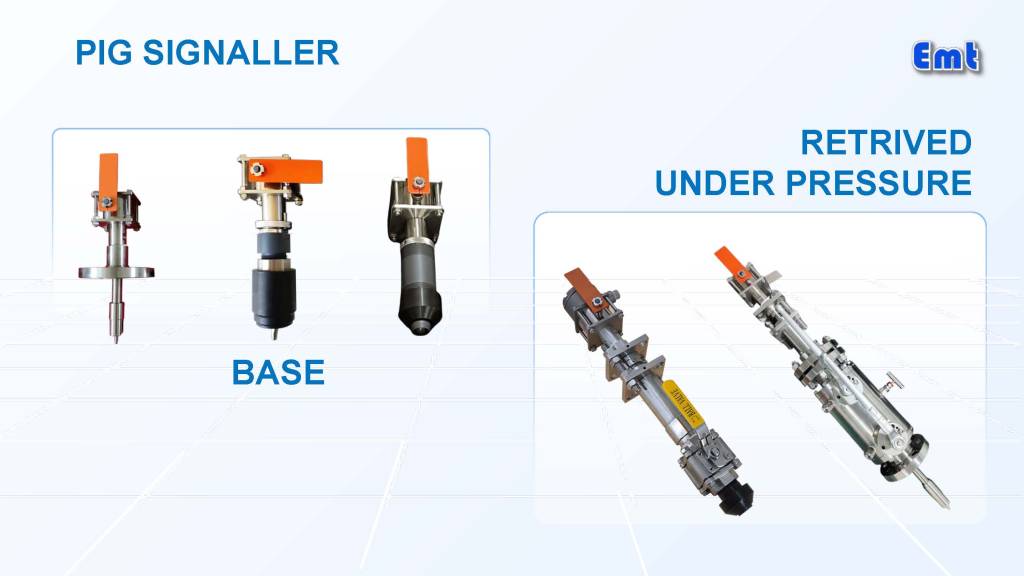
Both types install at pipeline launcher and receiver stations, where confirming that a pig has left or arrived is essential to the pigging sequence. They also suit intermediate checkpoints along a line, where operators want to track pig progress between stations. Intrusive indicators pair naturally with quick open closures on launcher and receiver barrels, and both families connect through flanged joints per ASME B16.5. For sour service, wetted parts and materials follow NACE MR0175. In hazardous areas, the electrical interface and signal transmission must meet explosion-proof certification requirements.
Why Choose This Design?
- Two detector families let you match the instrument to the pipeline, not the reverse.
- Non-intrusive detection keeps the bore clear, so pigs pass without obstruction or probe wear.
- Latching manual reset flags preserve each passage event until an operator clears it.
- Explosion-proof electrical interfaces support safe operation in classified hazardous areas.
- Cast aluminium heads and 316 stainless steel remote boxes resist demanding field conditions.
- Flanged connections per ASME B16.5 simplify installation at launcher and receiver stations.
Who Is EMT and Why Trust Us?
EMT is an oil and gas pipeline equipment manufacturer serving pipeline operators, EPC contractors, and pigging system integrators. Our product range covers pig detectors and signallers, quick open closures, pig launchers and receivers, chemical injectors, and pig fittings, so a single supplier can support the whole pigging station. We hold the ASME U Stamp for pressure equipment, and we build wetted parts and material selections to NACE MR0175 where sour service applies. Flanged connections follow ASME B16.5.
Every pipeline pig detector is configured against your line size, flange standard, hazardous area classification, and indication requirement. Our team reviews the electrical interface and signal transmission early, because explosion-proof compliance must be settled before fabrication begins. For the remote box, 316 stainless steel is the default; aluminium is available, but it requires revised internal electronics, so we do not recommend it for small batch orders. We also exhibit at industry exhibitions, where customers review our pig signaller and closure designs in person. Send your line data and indication requirements to EMT, and we will confirm the configuration, certification, and delivery schedule for your project.
FAQ
What is the difference between an intrusive and a non-intrusive pig detector?
An intrusive pig indicator uses a probe that contacts the pig inside the bore and trips the indicator when the pig passes. A non-intrusive pig signaller detects passage without penetrating the bore, so nothing obstructs pig travel. The CGQ-1 non-intrusive ultrasonic signaller detects, indicates, and records passage at the installation point.
Can a non-intrusive pig signaller output a 4-20 mA signal?
No. The non-intrusive interface does not support 4-20 mA output. It provides passage indication and a digital display instead. A minimum 2 inch flanged connection is recommended for the non-intrusive interface.
Where should pig detectors be installed?
Install them at pig launcher and receiver stations, where confirming pig departure and arrival drives the pigging sequence. They also work at intermediate checkpoints for tracking pig progress. Intrusive units pair with quick open closures; in hazardous areas the electrical interface must meet explosion-proof certification.
Related Products
- Quick Open Closure — fast access to launcher and receiver barrels.
- Pig Launcher and Receiver — complete pigging stations for pipeline operation.
- Chemical Injector — dosing equipment commonly supplied alongside pigging systems.
Reviews
There are no reviews yet.