
Description
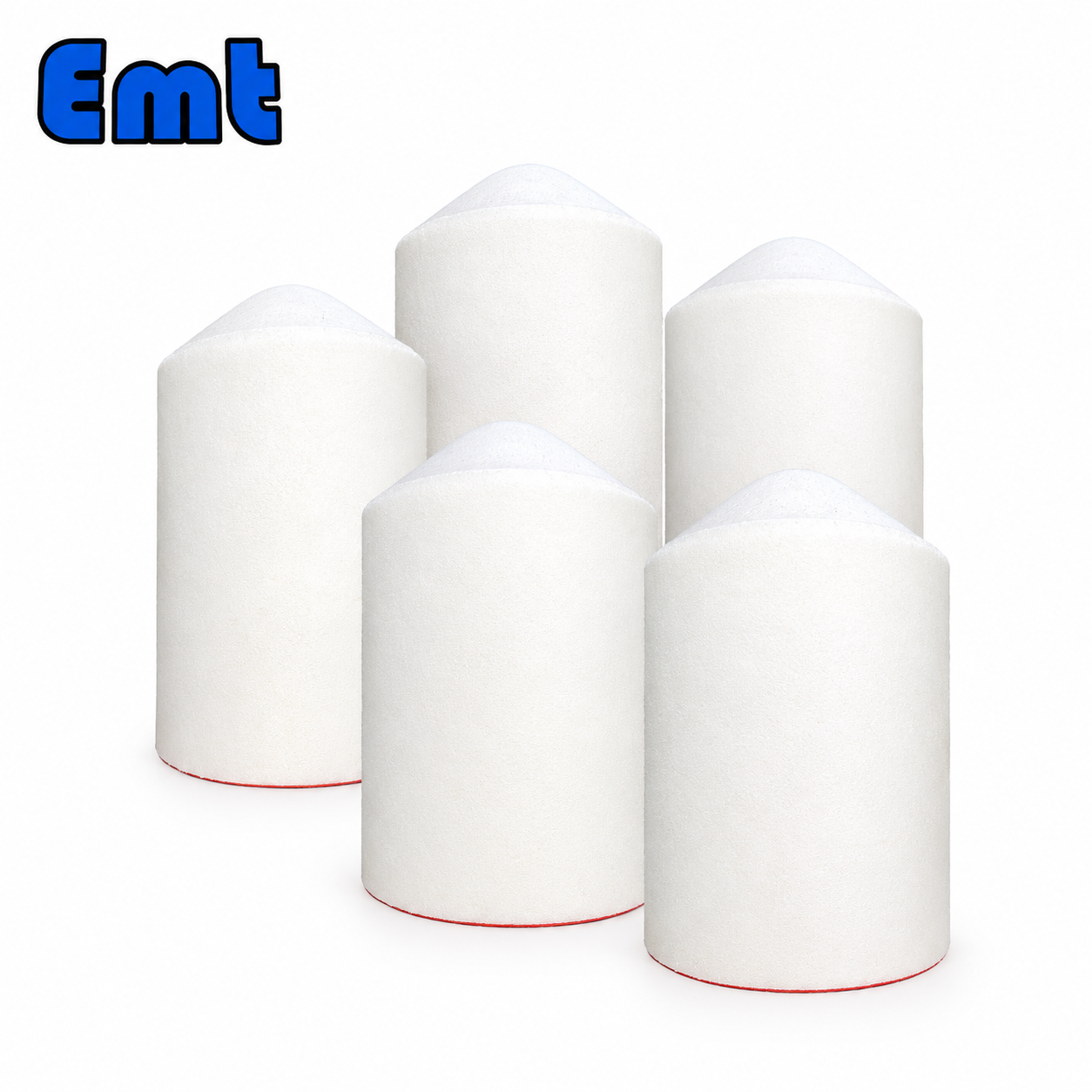
EMT manufactures bare foam pigs in the LCQZ-RT series for pipeline dewatering, drying, and cleaning. The polyurethane body starts at 0.03 MPa and compresses through bends without a coating or brush.
What Is a Bare Foam Pig
A bare foam pig manufacturer moulds the plain polyurethane pig that operators send through a line to push out water, dry the wall, and lift loose deposits. EMT builds the LCQZ-RT bare foam pig from open-cell polyurethane, with no coating, no brush, and no discs. Its low starting pressure and high compressibility carry it through bends, reduced bores, and rough field welds that would stop a rigid scraper.
Operators order bare foam pigs for jobs where flexibility matters more than scraping force. After a hydrostatic test, the pig drives standing water ahead of it. Before gas commissioning, a drying run takes the last film of moisture off the wall. On multi-product lines it acts as a soft separator, and the open cells hold liquid as it travels. Nothing abrasive sits on the body, so the pig will not score coated or lined pipe. The bare grade therefore runs first, with a brush pig following to lift harder scale.
What Are the Key Parameters?
| Parameter | Specification |
|---|---|
| Body configuration | Bare foam, no coating, brush, or discs |
| Foam material | Open-cell polyurethane |
| Density range | 35 kg/m³ to 220 kg/m³ |
| Starting pressure | 0.03 MPa |
| Withstand pressure | 7 MPa |
| Stretch rate | 320% |
| Compression ratio | 40 |
| Flex life | 50,000 cycles |
| Attrition rate | 2 mm per 100 km |
| Operating distance | 50 km to 150 km |
| Operating temperature | -30 °C to 100 °C |
| Sizing | Moulded to the nominal bore you specify |
Density is the one variable worth a conversation. Older pipeline practice favoured medium and high grades to suit a known deposit, while current guidance leans toward low density for drying and dewatering duty. Send us the deposit type, the line size, and the run length you need, and we confirm the grade in writing before moulding starts.
How the Foam Body Clears a Line
Line pressure acts on the back face and drives the pig forward. With a starting pressure of 0.03 MPa, the pig begins to move on a very small differential, which matters on low-pressure systems and short runs where a stiff tool would sit still. A compression ratio of 40 and a stretch rate of 320% let the body squeeze through bends and reduced bores, then recover its shape on the far side. The foam sweeps the wall, pushes liquid ahead of it, and holds part of that liquid inside the open cells. Wear runs at about 2 mm per 100 km, and that figure sets the practical working life of the pig.
Where Should You Use It?
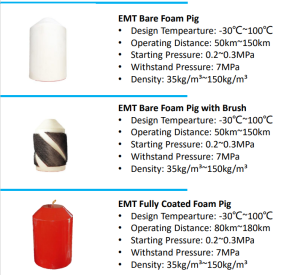
Use bare foam pigs for dewatering after a hydrostatic test, drying before commissioning, degreasing, and light cleaning where the deposit is soft. They also work as soft separators between dissimilar products, and as the first pass in a cleaning programme on coated or lined pipe where a scraper would risk damage. If the line carries hard scale or rust, order the brush version, which adds mechanical scrubbing and extends the working distance to 100–300 km. For heavier fouling, a medium or high density pig carries more body into the deposit.
Why Choose EMT as Your Manufacturer?
As a manufacturer of bare foam pig , EMT maintains a stable production capacity and packaging speed every month to ensure that customers can receive the products on time.
- Direct factory control: foam moulding, machining, and dimensional inspection sit on one site in Shenyang.
- Density is matched to your duty across 35 to 220 kg/m³ and confirmed before moulding begins.
- A starting pressure of 0.03 MPa lets the pig move on minimal differential pressure.
- Compression ratio 40 and 320% stretch carry the body through bends and reduced bores.
- Slow wear of about 2 mm per 100 km gives each pig a working distance of 50 to 150 km.
- Made to your nominal bore, with brush, coated, and criss-cross variants drawn from the same series.
- Documentation and export packing are prepared for EPC and third-party inspection.
FAQ
Q: Which density should I order?
A: Low density suits drying and dewatering, while medium and high grades carry more body into heavier deposits. We confirm the grade in writing before moulding.
Q: How far can one bare foam pig travel?
A: A typical working distance is 50 km to 150 km. The foam wears at roughly 2 mm per 100 km, so the run length depends on the bore and the deposit.
Q: Can it pass bends and reduced bores?
A: A compression ratio of 40 and a stretch rate of 320% let the body deform through bends and smaller bores, then recover its shape once past them.
Reviews
There are no reviews yet.