Every day, the world moves more than 2.5 million kilometers of oil, gas, water, and refined products through pipelines. To the public they look like silent steel highways; to the engineers who run them they are living systems that slowly suffocate from the inside. Wax plates onto cool walls, condensed liquids pool in low spots, and a black powder of iron sulfide, iron oxide, and mill scale migrates along the bore. Left alone, these deposits narrow the flow path, raise pressure drop, force compressors to work harder, accelerate corrosion, and can eventually trigger a shutdown.
The global answer is pipeline pigging—a maintenance discipline so routine it is now a multi-billion-dollar market growing as networks age and integrity rules tighten. That spending is not comfort. It is one of the few interventions that can restore lost throughput, cut energy cost, and prepare a line for inspection without stopping production.
This article connects three questions every operator faces: what is pigging and why does it matter; what kinds of pigs exist and how do you match the tool to the job; and how often should a line be cleaned? The answers are linked. The pig depends on what is inside the line, the frequency depends on how fast that deposit grows, and the business case depends on whether the run costs less than the pressure drop, corrosion, or shutdown it prevents.
1. What Is Pipeline Pigging and Why Is It Essential for Flow Assurance?
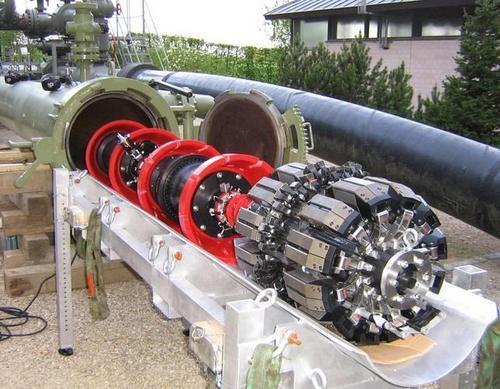
At its simplest, pipeline pigging is the practice of inserting a mechanical device—a “pig”—into a pipeline and allowing the flowing product to push it from one end to the other. The pig scrapes, brushes, sweeps, or seals against the pipe wall, moving deposits ahead of it or carrying them to the receiver. The pipeline usually stays in service while the pig runs. No dewatering. No full shutdown. No cutting the line open.
The term “pig” is visual in origin: early versions squealed in the pipe. Today they are precision tools of foam, steel mandrels with elastomer cups, wire brushes, magnets, gel, or sensors. All depend on differential pressure—the operator creates a difference across the pig, driving it at roughly 0.5 to 5 metres per second through the bore.
Flow assurance means guaranteeing that hydrocarbons move from reservoir to market without interruption, and pigging sits at its center because the threats to flow are almost all internal. Wax precipitates below the wax appearance temperature and thickens on the wall. Condensed liquids in wet-gas lines form slugs that overload separators and feed corrosion. Iron sulfide, iron oxide, and mill scale travel along the bottom and damage valves, meters, and compressors. Mineral scale, asphaltenes, and bacterial biofilms add hard or corrosive layers.
The cost is twofold. Deposits raise the friction factor and shrink the effective area, so the same flow needs more pressure and more horsepower—more energy. And the liquid films and settled matter provide the electrolyte and crevices that accelerate internal corrosion, shortening asset life. Pigging is therefore a flow-assurance control loop, not a discretionary chore: it removes the friction and corrosion accelerants that build up simply because the line is working.
2. Types of Pipeline Pigs: Choosing the Right Tool for the Deposit
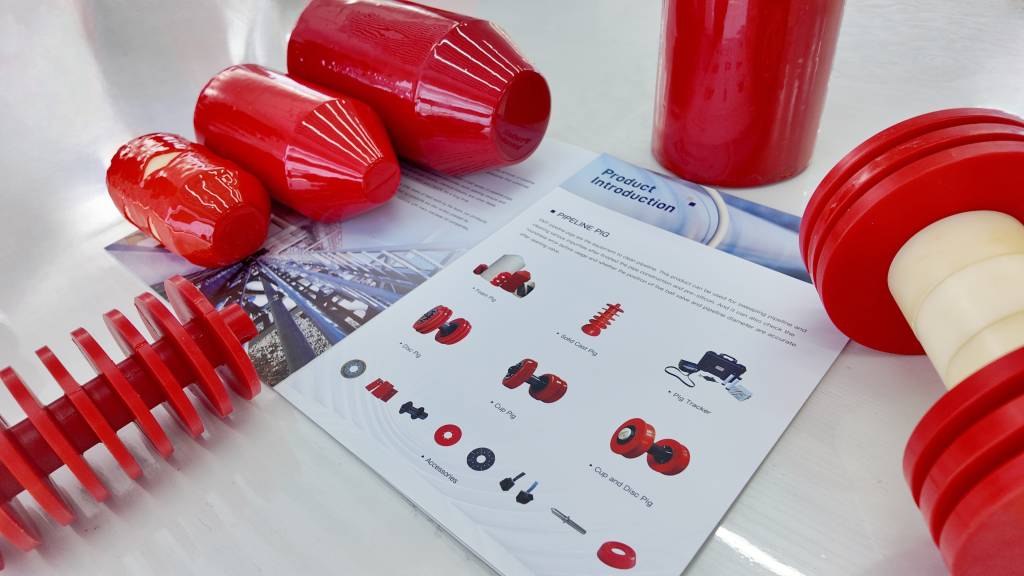
If pigging is the control loop, the pig is the actuator, and like any actuator it must be sized to the load. The most common mistake is using the same tool regardless of what is coating the pipe wall. A foam pig will sweep liquids but will not remove adherent wax. A wire-brush pig will scour scale but can generate debris slugs that overwhelm a receiver on a gas-gathering line. The right sequence matters as much as the right tool.
Foam pigs are light, compressible polyurethane bodies that conform to dents and bends and pass obstructions that would stop a rigid pig. They are the usual first tool into an unknown or fouled line, proving passability and sweeping loose liquids without a stuck-pig emergency, but their weak wall contact means they will not remove hard wax, scale, or biofilms.
Mandrel pigs fit a steel or composite body with sealing cups or discs that drive liquids ahead and hold a strong differential pressure; some carry gauge plates to find bore restrictions. They suit routine liquid removal and batching but are fixed-diameter unless reconfigured.
Brush pigs add scraping elements to a mandrel and abrade wax, scale, and light rust—the workhorses of aggressive cleaning—but they generate a heavy debris load and can damage soft coatings.
Magnetic pigs use permanent magnets to capture ferrous particles ahead of an inspection run, protecting MFL and UT sensors. Gel pigs are chemical slugs that dissolve wax plugs and scale in complex or small lines, though they need disposal and a follow-up flush.
Intelligent pigs are inspection devices, not cleaners—they carry MFL, UT, or EMAT sensors to map the wall—and because a dirty line gives bad data, cleaning pigs run first.
| Pig Type | Primary Mechanism | Best For | Limitation |
| Foam pig | Compressible foam conforms to bore; sweeps liquids | Initial clearance, liquid removal, proving passability | Will not remove adherent wax or scale |
| Mandrel pig | Elastomer seal drives liquids ahead | Routine liquids removal, batching, light deposits | Fixed diameter; debris-slug risk if fouling is heavy |
| Brush pig | Brushes or blades abrade wall | Wax, scale, pre-ILI cleaning | High debris load; not for soft coatings |
| Magnetic pig | Magnets attract ferrous particles | Pre-ILI ferrous debris removal | Single-function; not a cleaner |
| Intelligent pig | MFL/UT/EMAT sensors inspect wall | Wall-thickness measurement, defect mapping | Requires a clean line; not a cleaner |
The progressive pigging principle ties tool choice to sequencing: a foam pass to clear the bore and establish baseline differential pressure; a mandrel or disc pass at increasing bypass restriction to drive out liquids and soft deposits; a brush or blade pass for wall-adherent material; and a final clean flush before the ILI run. Compressing this sequence—or skipping debris assessment between runs—is how routine cleaning becomes a stuck-pig recovery. The debris recovered at the receiver after each run is the feedback that tells the operator whether the line is clean enough for the next, more aggressive tool
3. How Often Should Oil and Gas Pipelines Be Cleaned?
There is no universal pigging interval. The right frequency is whatever keeps a specific line ahead of its own fouling rate. A wet, waxy crude line running cool may need cleaning every few weeks; a dry, clean natural-gas transmission line may go one to five years between runs. The answer depends on four classes of variables: the product, the operating conditions, the pipeline condition, and the regulatory or inspection schedule.
Product type is the biggest driver. Waxy crude oils deposit paraffin in a manner strongly dependent on temperature; high-wax crudes need frequent maintenance pigging, while dry-gas lines can stretch for years. Wet-gas gathering systems accumulate condensed liquids quickly and often need frequent, sometimes daily, liquid-removal runs. Refined-product lines are driven by quality and cross-contamination risk. Water lines are cleaned for biofilm, sediment, and tuberculation control. CO₂ lines are cleaned to remove corrosion products and moisture.
| Pipeline Type | Typical Cleaning Frequency | Primary Drivers |
| Crude oil transmission | 6–12 months (high-wax lines: weeks) | Wax deposition rate, sludge build-up, flow efficiency |
| Wet-gas gathering | Weekly to monthly (automated: several times daily) | Liquid accumulation, corrosion inhibition, slugging |
| Dry-gas transmission | 1–5 years | Debris accumulation, pre-ILI preparation, flow efficiency |
| Refined products | 1–3 years | Product quality, cross-contamination risk, ILI schedule |
| Water transmission | 1–5 years | Biofilm, sedimentation, tuberculation, water quality |
4. Outlook: Pigging as a Data-Rich Discipline
The next decade of pigging is less about the pig itself and more about what the run tells you. Digital integration is turning it from a calendar task into a data-rich control loop: non-intrusive signallers confirm passage and speed, launcher-to-receiver pressure telemetry quantifies the resistance the pig meets, and debris logging trends what the receiver recovers. Predictive analytics merge pigging, corrosion, flow, and temperature data to forecast the next run instead of relying on fixed dates. Advanced sensors can resolve corrosion pits near 0.1 mm—but only on a clean line. The message is unchanged: an uncleaned pipeline hides its true condition, and pigging removes the mask.