
Description
The Function of a Gauging Pig
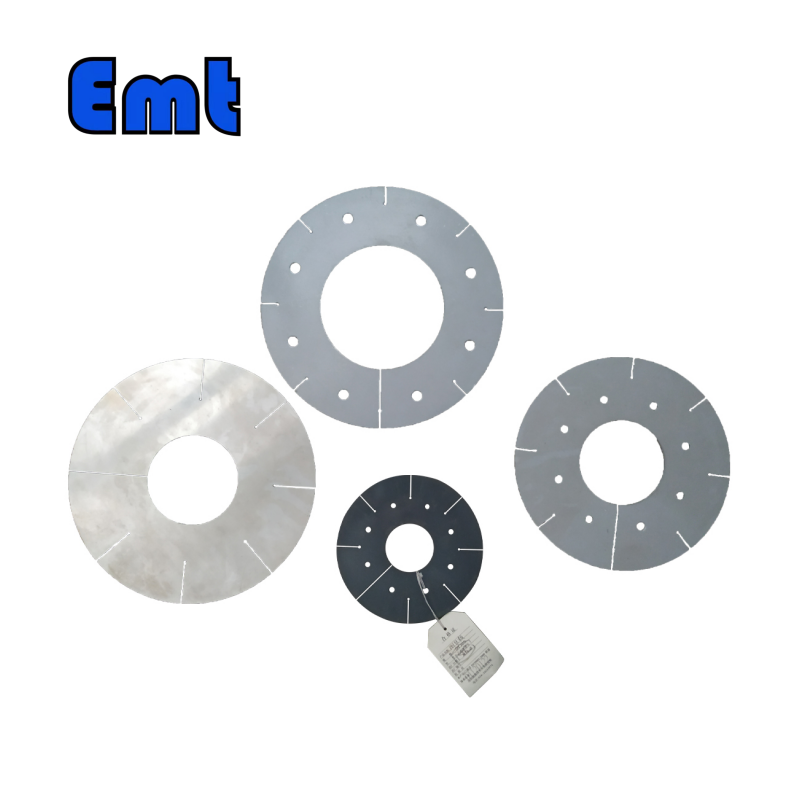
Technically, the gauge plate is a calibrated sacrifice element. EMT machines it from soft aluminum (1050 / 1060 grade) at roughly 95% of the internal diameter (ID) with a defined geometric tolerance. When the pig traverses the line, this plate sweeps the full cross-section at the leading face. Any local restriction — weld-root protrusion, internal dent, valve misalignment, or lodged debris — exceeds the plate clearance and produces a measurable deformation. The deformation geometry, read together with the pig-tracking signal, maps directly to the obstruction’s depth, angular position, and longitudinal location.
What Is a Pipeline Gauging Pig?
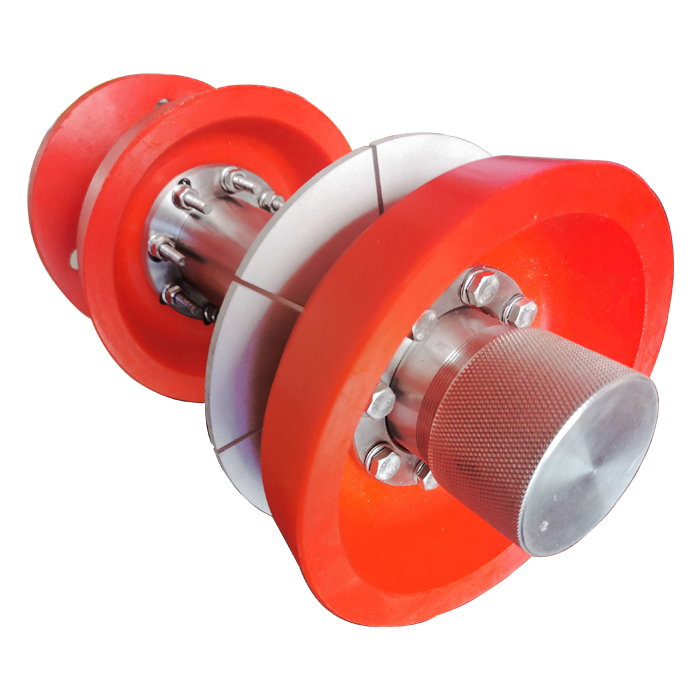
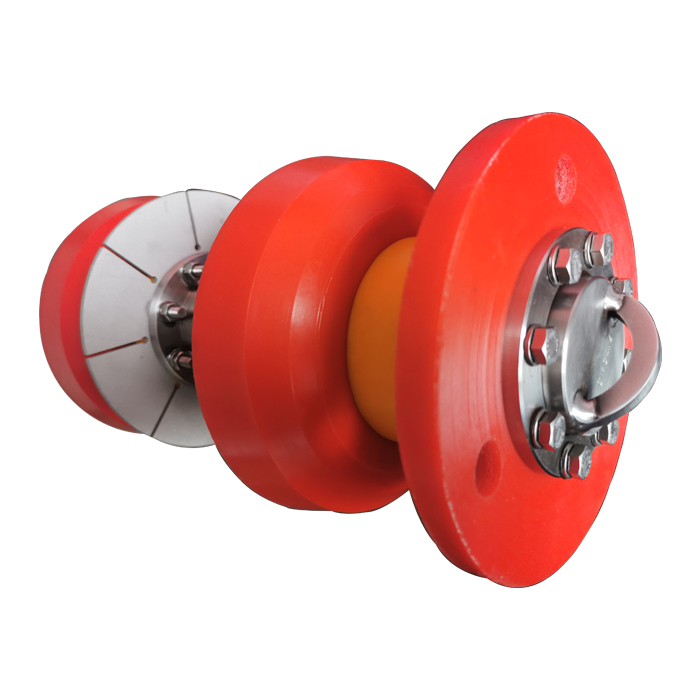
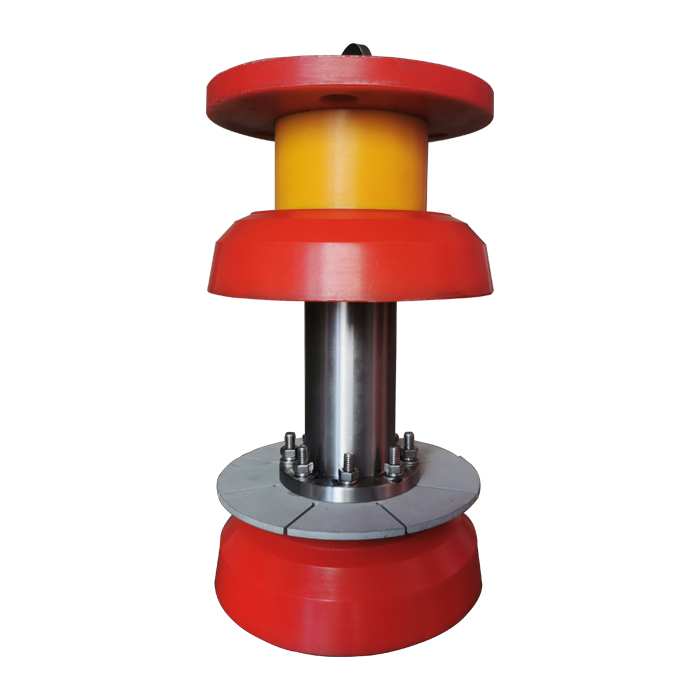
This gauging pig is a mandrel pig that carries a gauge plate to prove the bore. Operators also call it a gauge pig or a geometry-proving pig. Instead of cleaning or inspecting, it checks that nothing blocks the pipe.
The pig body uses steel or stainless mandrels with polyurethane discs. A soft aluminum plate sits at the front, sized to about 95% of the internal diameter. As a result, the plate bends the moment it meets a weld bead, dent, or lodged object.
How Does a Pipeline Gauging Pig Work?
This makes the gauging run a first-order screening step in pipeline integrity management:
- Free-bore confirmation.It proves the minimum clear bore against the design ID. A plate that returns undeformed at 95% ID is read as “line clear.”
- ILI de-risking.The geometry map predicts whether a caliper or MFL (magnetic flux leakage) tool of a given odometer and drive section can pass without jamming.
- Repeatable baseline.Re-running after hydrotest, repair, or intervention gives comparable geometry records for trend analysis under API 1163.
In short, the gauge pig converts an unknown bore into a quantified, pass/fail geometry datum before any high-value asset enters the line — protecting both pipeline integrity and the inspection budget.
Why Gauging Protects Pipeline Integrity
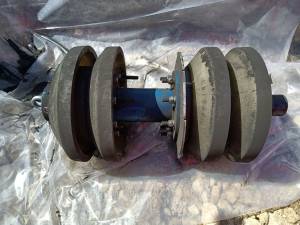
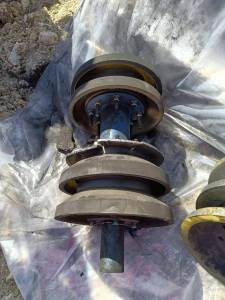
A clear bore is the foundation of pipeline integrity. If a smart (ILI) tool or batching pig meets a restriction, it can stall and trigger a costly shutdown. Gauging first removes that risk before the high-value run.
Additionally, a gauging run sets the geometry baseline. You capture ovality, bend radius, and wall reduction in a repeatable way. Over time, these records support integrity management under API 1163 and help you plan every future inspection with confidence.
Key Specifications
| Parameter | Specification |
|---|---|
| Nominal Diameter | DN50 – DN1800 (2″ – 72″) |
| Pig Type | Mandrel gauging pig (bi-directional disc optional) |
| Gauge Plate | Soft aluminum, typically 95% of bore (configurable) |
| Mandrel Material | Carbon steel / 304 stainless steel |
| Disc Material | Polyurethane (Shore A 75–90), Viton, Neoprene, NBR |
| Operating Temperature | −40°C to +120°C (standard); up to 200°C on request |
| Operating Pressure | Up to 40 MPa (line / launcher-receiver rated) |
| Starting Pressure | 0.02 MPa |
| Recommended Speed | 1.0 – 2.0 m/s (gauging run) |
| Minimum Bend Radius | ≥ 1.5 DN (DN ≤ 150: ≥ 2.5 DN) |
| Accessories | Wire brush, gauging plate, magnetic cage, transmitter |
| Standards | ASME B31.3 / B31.4 / B31.8, API 1163, ISO 9001 |
Where Should You Use a Pipeline Gauging Pig?
Run a gauging pig at every stage where bore proof matters. During pre-commissioning, it clears welding slag and confirms the new line is safe. After hydrostatic testing, it verifies the dried bore before product enters.
Additionally, run it before any inline inspection (ILI) campaign. The gauge plate proves the smart tool can pass without jamming. In turn, this protects pipeline integrity and avoids an aborted, expensive inspection.
For maintenance after repairs, a gauging run confirms the fixed section meets spec. Specifically, this gives operators documented proof before the line returns to full service.
Frequently Asked Questions
What is a pipeline gauging pig used for?
It proves the bore is round, clear, and free of obstructions before commissioning or inspection. Operators use it to confirm pipeline integrity and to protect downstream smart pigs from getting stuck.
What is a gauge plate and what size should it be?
The gauge plate is a soft aluminum disc at the pig’s front. It is typically set at 95% of the internal diameter. It bends on contact with any restriction, leaving a clear mark for post-run analysis.
When should I run a gauging pig?
Run it after construction and hydrotesting, before every ILI campaign, and after major repairs. These runs keep your pipeline integrity records current and reduce the risk of a stuck inspection tool.
How is a gauging pig different from a cleaning or smart pig?
A cleaning pig removes debris, and a smart pig maps wall defects. A pipeline gauging pig only proves geometry. Most programs follow foam → brush → gauging → smart pig in sequence.
How does gauging support pipeline integrity management?
It baselines geometry and confirms safe passage for inline inspection tools. Those records feed integrity management programs under API 1163, so you can plan inspections and justify re-rates with hard evidence.
Reviews
There are no reviews yet.