
Description
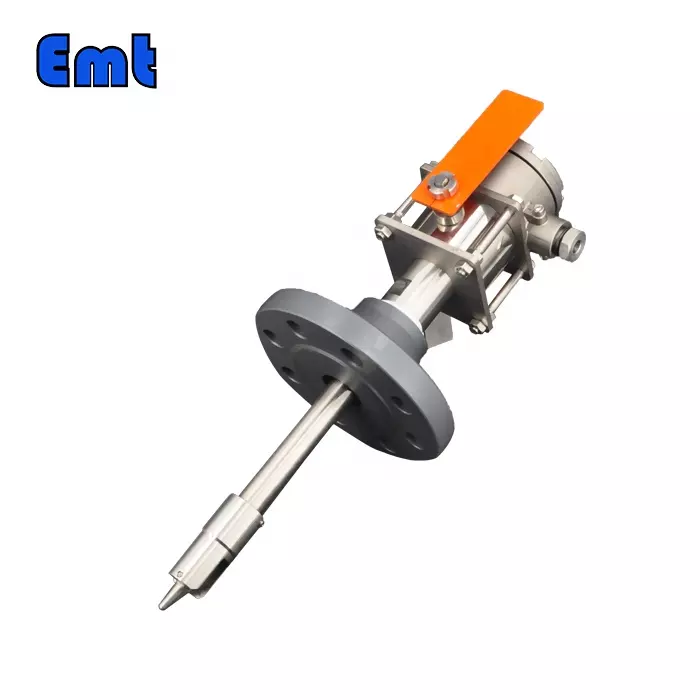
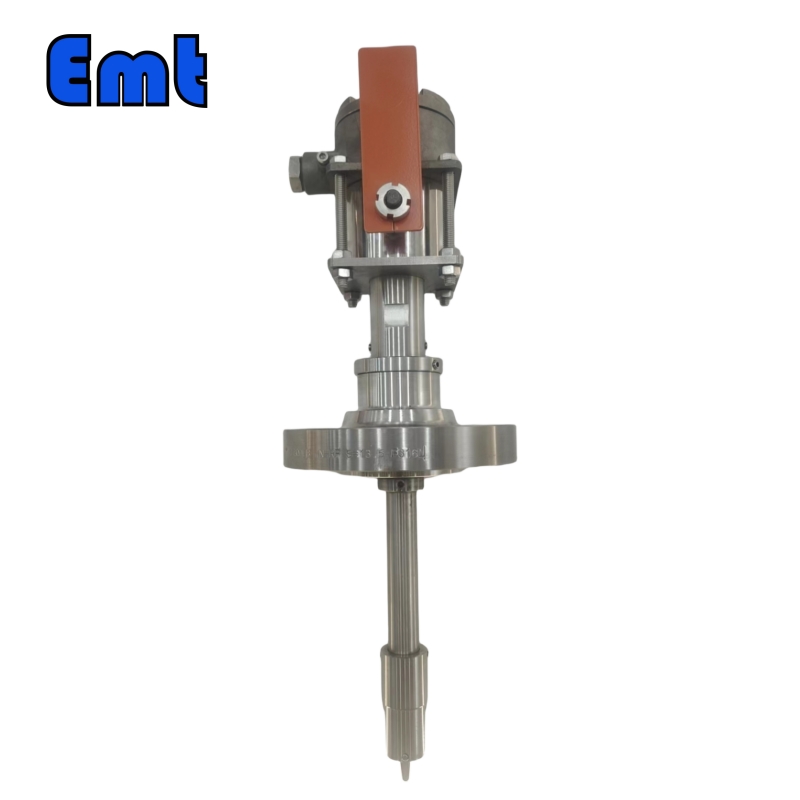
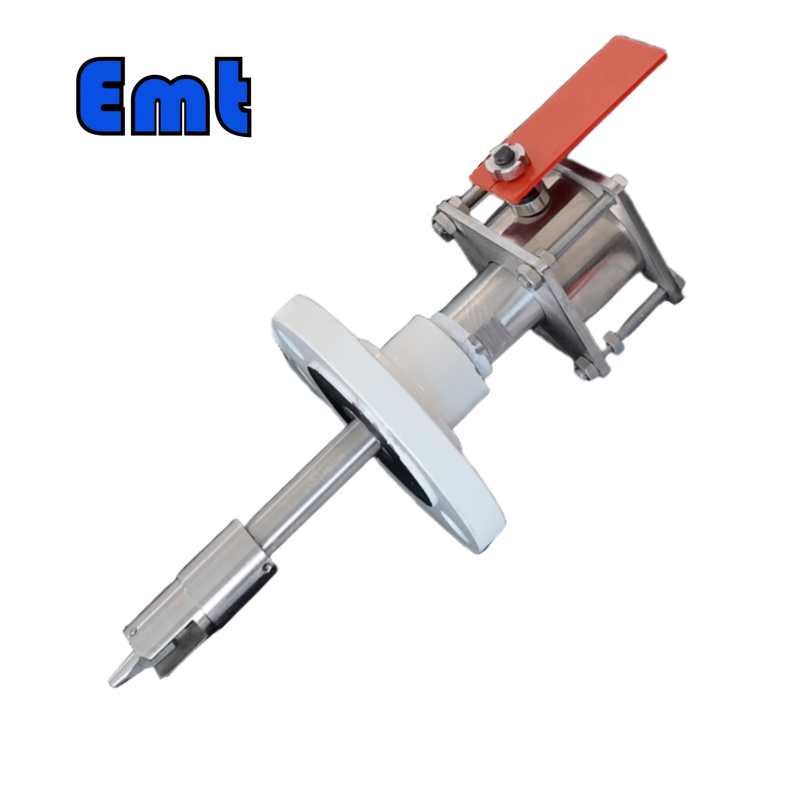
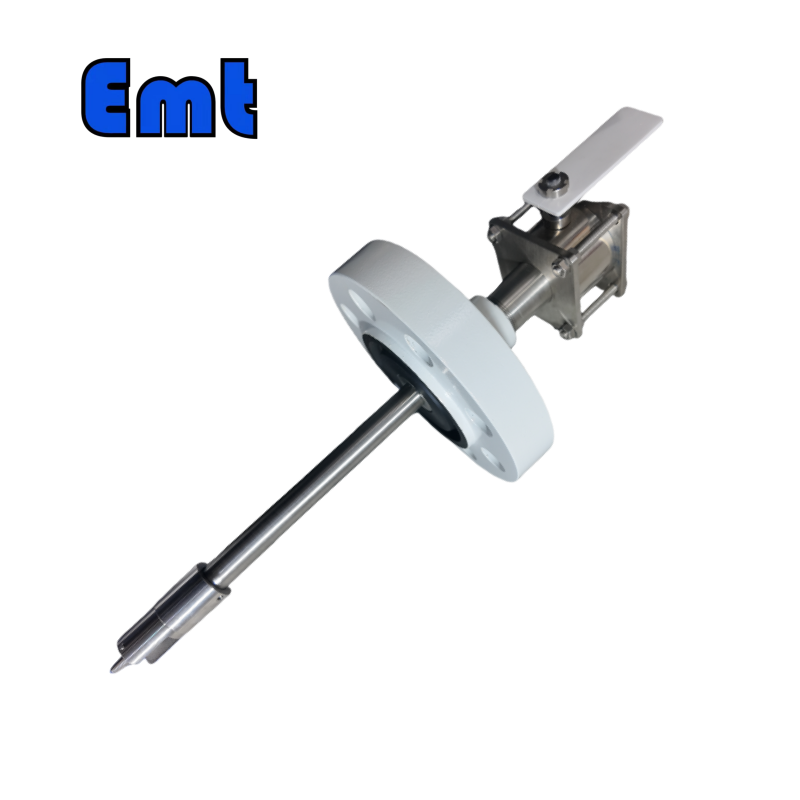
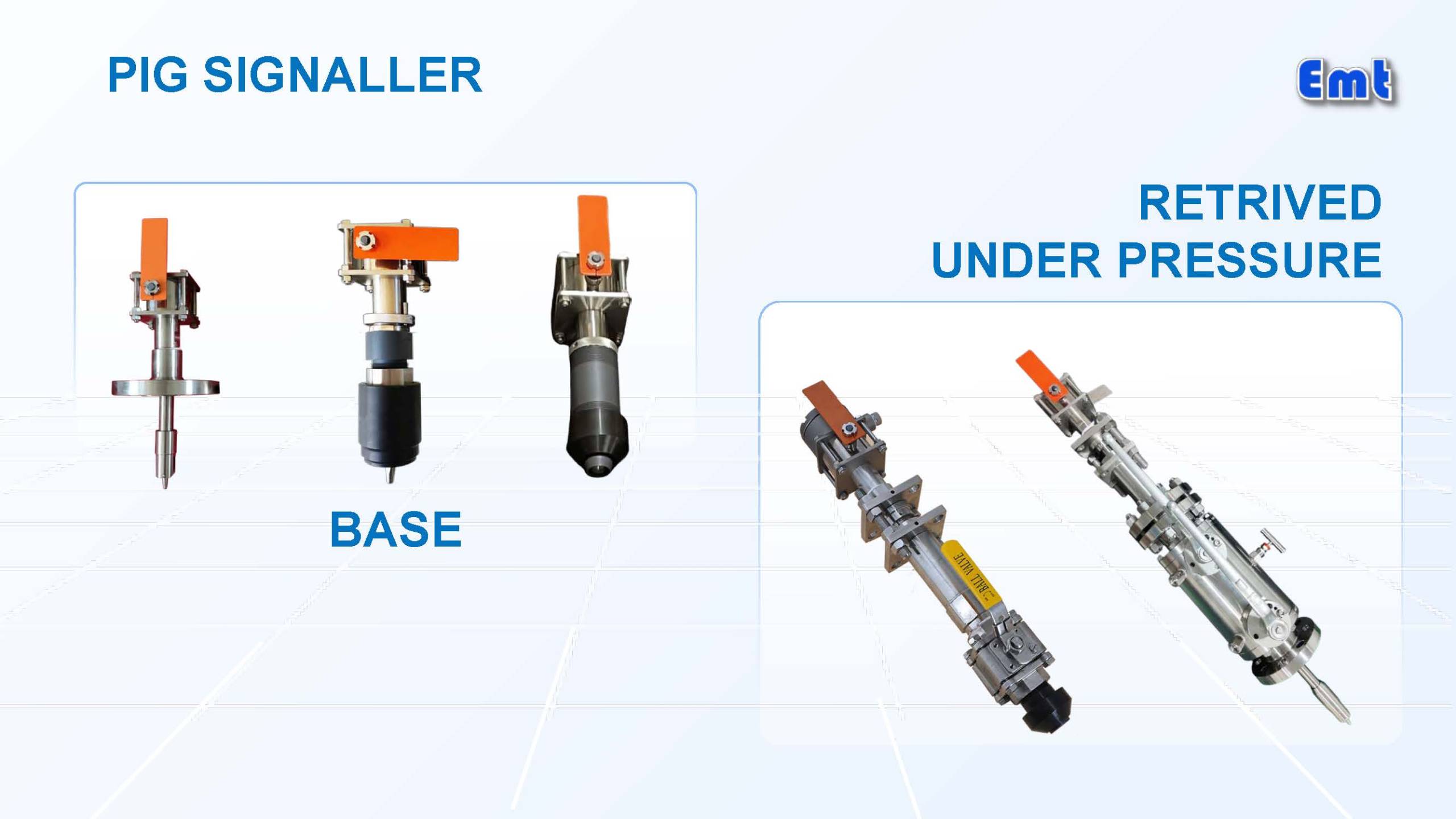
Intrusive, bidirectional pig passage detector monitors pipeline pig passage by triggering a visual flag or electrical signal when the pig passes. EMT’s SN2-TQZ welded base model handles 0-26 MPa and fits various wall thicknesses.
What Does a Pig Passage Detector Do?
Pipeline operators run pigs (cleaning, inspection, or separation devices) through their lines on a regular schedule. You need to know the pig reached a certain point, not just that it entered the line. A pig passage detector gives you that confirmation at specific stations along the pipeline.
EMT’s SN2-TQZ welded base pig signaler is an intrusive, bidirectional device. It mounts on a welded base on the pipe wall. Inside the pipe, a trigger extends near the inner wall. When the pig passes, it pushes the trigger. The trigger pulls a connecting rod and releases the indicator flag.
The flag stays up until someone resets it manually. That means even if you walk by hours later, you can still see the pig passed.
 How It Works
Take the SN2-TQZ-BBXXX as an example. The plug assembly has a bidirectional trigger at its end. The trigger extends into the pipeline near the inner wall.
When the pig passes:
- The trigger gets pushed.
- The connecting rod pulls the indicator flag release.
- The flag pops up (horizontal becomes upright).
- On Type C and D models, an SPDT electric switch also activates.
After the pig passes, the trigger automatically returns to its original position. Press the flag down to reset it. If the flag won’t stay down when you press it, the trigger hasn’t returned, which means the pig is still at that location.
Indicator Types
EMT makes three variants of this pig passage detector:
- Type B: The indicator flag changes from horizontal to upright. Purely visual. No electrical parts.
- Type C: Same visual flag, plus an SPDT electrical switch activates and stays in position. You can wire this to a control room alarm.
- Type D: Adds a digital time display. The display starts timing when triggered and stores the actual trigger time. After the factory-set time, the display returns to standby.
Why Choose EMT’s Pig Passage Detector?
1. Intrinsically Explosion-Proof
The SN2-TQZ contains no electrical components in the hazardous area. There is no friction or impact between metal parts. That means it is intrinsically safe without needing to be classified as an “intrinsically safe explosion-proof electrical device.” For oil and gas pipelines, this matters.
2. Adjusts to Your Pipe Wall Thickness
Pipeline walls vary. EMT’s pig passage detector handles that. The trigger insertion depth is adjustable from 0 to +/-10 mm. You rotate the plug assembly to set the extension length so the trigger tip is tangent to the pipe inner wall after installation.
3. Pressure Ratings for Real Pipelines
Working pressure options:
- 0-5 MPa (low-pressure lines)
- 0-16 MPa (mid-pressure)
- 0-26 MPa (high-pressure gas lines)
Need something else? EMT designs custom pressure ratings on request.
4. Base Materials for Your Environment
Choose the base material that matches your line:
- ASTM A105N (carbon steel, normalized)
- ASTM A350 LF2 (low-temperature service)
- AISI 316L (stainless, corrosive service)
Installation in Brief
- Drill a hole at least 51 mm in diameter in the pipeline at the installation point.
- Measure the pipe wall thickness and standoff.
- Calculate the adjustment distance: A = 153 – (standoff + WTH) – 26.
- Screw the plug assembly to the corresponding position.
- Insert the indicator into the pipe opening, align the flat mouth parallel to flow direction.
- Tack-weld the base, then remove the plug assembly before final welding.
- After the base cools, reinstall the plug assembly with lubricant on the sealing surface.
- Tighten the lock nut.
Full dimensional drawings and welding details are in the instruction manual.
Specifications
| Parameter | Value |
|---|---|
| Product name | SN2-TQZ Welded Base Pig Signaler |
| Working pressure | 0-5 / 0-16 / 0-26 MPa (custom on request) |
| Operating temperature | -20 to 150 °C |
| Base material | ASTM A105N / A350 LF2 / AISI 316L |
| Trigger adjustment range | 0 to +/-10 mm |
| Pipe opening diameter | >= Phi51 mm |
| Indicator types | B (visual), C (visual + SPDT switch), D (visual + digital timer) |
| Explosion protection | Intrinsically explosion-proof (non-electrical) |
| Applications | Oil & gas pipelines, pig launch/receive stations |
FAQ
What is a pig passage detector?
It is a device installed on a pipeline to detect when a pig passes that location. It gives operators confirmation that the pig reached a specific point.
What’s the difference between Type B, C, and D?
Type B is visual only, a flag pops up. C adds an electrical switch output. D adds a digital time display that records when the pig passed.
Can I adjust it for different pipe wall thicknesses?
Yes. The trigger insertion depth adjusts from 0 to +/-10 mm. You set it so the trigger tip is tangent to the pipe inner wall.
Is it explosion-proof?
The device contains no electrical components in the hazardous area and has no metal-on-metal impact. It is intrinsically explosion-proof without needing ATEX/IECEx electrical certification.
What pressure ratings are available?
Standard models handle 5, 16, or 26 MPa. EMT also makes custom ratings on request.
Reviews
There are no reviews yet.