
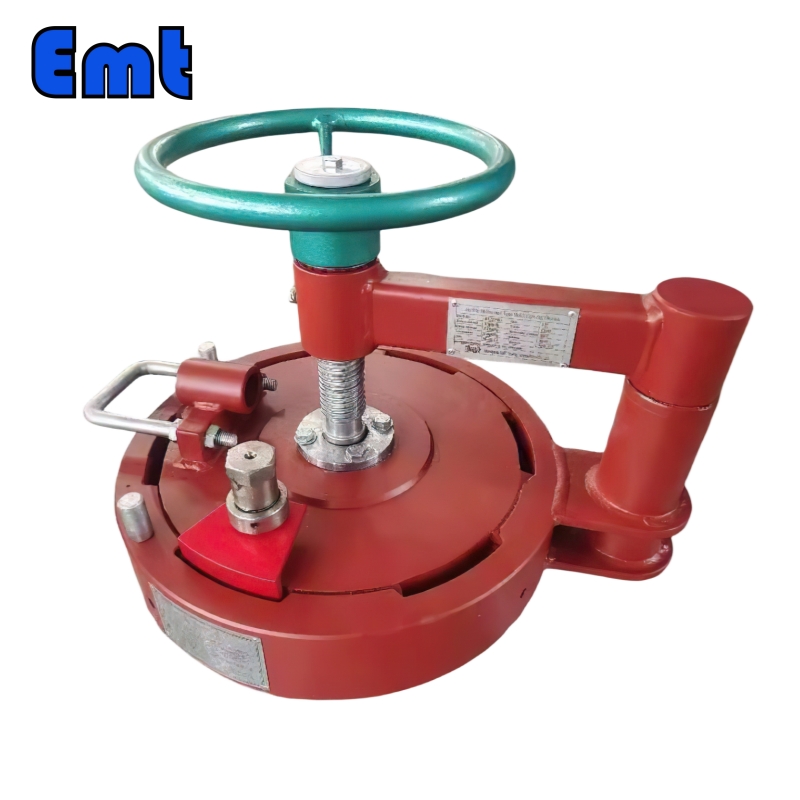
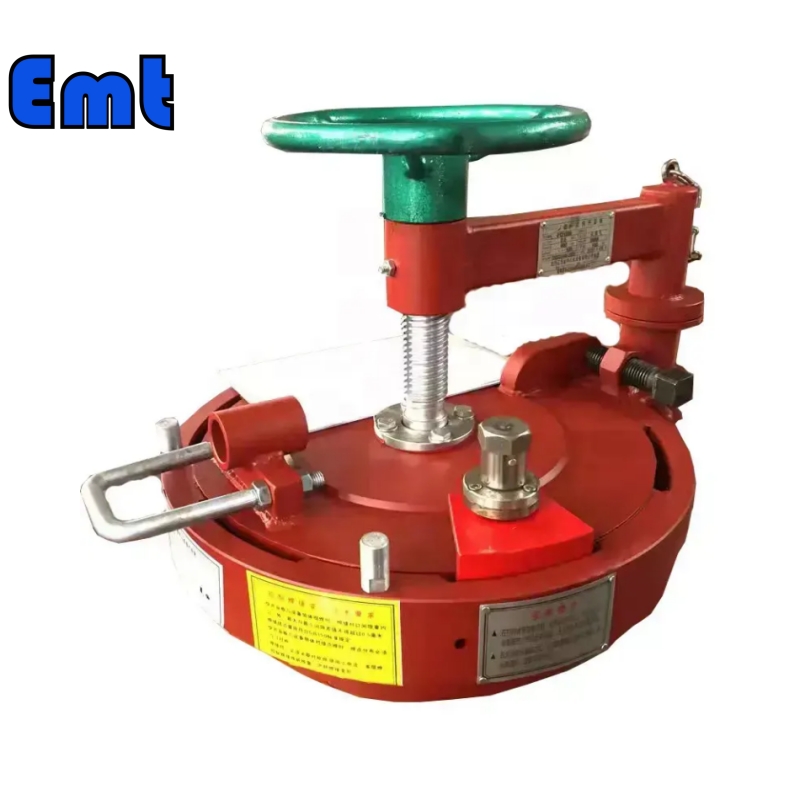
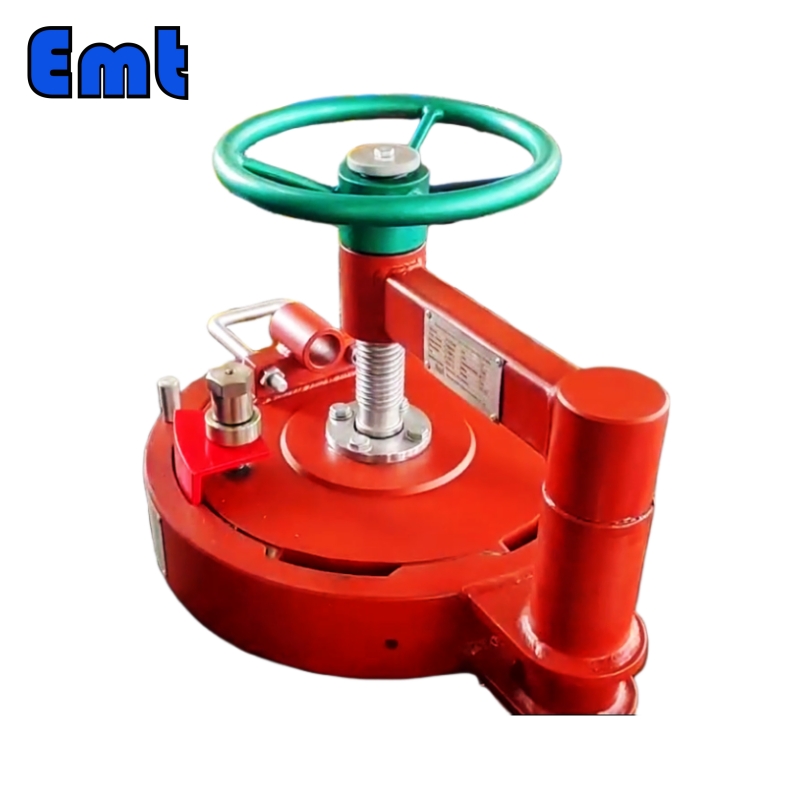

Description
What Is a Pressure Vessel QOC?
A pressure vessel quick opening closure mounts onto the end of a pressure vessel or pipeline branch. It replaces a bolted flange with a hinged door and a locking mechanism. The door swings open after the operator releases the locking device. This design eliminates the time and labor cost of flange bolt removal.
For small and medium pipelines, the bayonet type quick opening closure works best. It opens and closes quickly with a simple rotation. For large-diameter pipelines above DN400, the lock-ring type quick opening closure is the preferred choice. It requires less operating force, which makes it practical for heavy doors that a single technician cannot handle.
All three types can be installed in horizontal or vertical orientations. This flexibility allows engineers to match the closure to existing vessel layouts without reconfiguring the pipeline.
Key Technical Specifications
| Parameter | Value |
|---|---|
| Nominal Diameter | DN100 – DN1800 |
| Design Pressure | Up to 40 MPa |
| Operating Temperature | -50°C to 300°C |
| Working Medium | Oil, Natural Gas, Water |
| Material Options | 16Mn, A350LF2, A105, SS304, SS316, F51, F53, F55, INCONEL625, HASTELLOY C |
| Pipe Wall Thickness | 6 mm – 100 mm |
| Installation Orientation | Horizontal or Vertical |
| Opening Direction | Left-hand or Right-hand |
| Corrosion Allowance | 3 mm (standard), customizable |
| Safety Interlock | Standard (prevents opening under pressure) |
How Does a Quick Opening Closure Work?
The operator begins by confirming zero internal pressure inside the vessel. The safety interlock device physically blocks the opening mechanism when residual pressure exists. Once verified, the operator releases the locking device. For a bayonet closure, this means rotating the locking ring to disengage the bayonet teeth. For a lock-ring closure, the operator retracts the segmented lock ring from its groove.
After the lock releases, the operator swings the door open on its hinge. The entire process takes less than one minute. Closing follows the reverse sequence. The door swings shut, the lock engages, and the vessel is ready for pressurization.
The safety interlock device plays a critical role in every operation. It fulfills the function of preventing the quick opening closure from being opened when the pressure vessel is under pressure or when internal pressure has not been fully released. This feature meets the requirements of ASME Boiler and Pressure Vessel Code Section VIII, Division 1.
Three Closure Types: Which One Fits You?
Bayonet Type Quick Opening Closure
The bayonet closure uses interlocking teeth on the door and hub. A short rotation engages or disengages the connection. This design suits smaller diameters, typically DN100 to DN350. It offers the fastest operation cycle. Furthermore, the bayonet design has fewer moving parts, which reduces maintenance frequency.
Clamp Type Quick Opening Closure
The clamp closure uses external clamp segments that grip the door and hub flanges together. Tightening a few bolts or a single actuation screw secures the closure. This design works well across a broad diameter range. It provides excellent sealing uniformity because the clamp applies even pressure around the entire circumference.
Lock-Ring Type Quick Opening Closure
The lock-ring closure features a segmented metal ring that expands into a machined groove between the door and hub. When expanded, the ring locks both components together. This design requires the lowest operating force because the ring moves radially rather than axially. For this reason, lock-ring closures are recommended for large diameters, typically DN400 and above. One technician can operate a lock-ring door that would require a mechanical assist with other closure types.
Where Should You Use it?
Quick opening closures appear across the entire oil and gas value chain. In upstream production, separator vessels and filter vessels use closures to access internals for media replacement and cleaning. In midstream operations, pig launcher and receiver stations rely on quick opening closures at both the launch door and the receiver door.
Downstream refineries install closures on heat exchangers, knock-out drums, and molecular sieve vessels. Chemical plants and water treatment facilities also use them on pressure filters and ion exchange columns. Moreover, any vessel that requires frequent internal access benefits from a quick opening closure over a bolted flange.
Outside of oil and gas, the closures serve industrial gas storage, pharmaceutical processing, and food-grade pressure vessels. EMT customizes material grades to match the chemical compatibility requirements of each application.
Why Choose EMT ?
EMT brings in-house engineering, manufacturing, and testing under one roof in Shenyang, China. The company holds a Manufacture License of Special Equipment for pressure vessels and a Design License of Special Equipment, both issued by Chinese regulatory authorities. Every closure undergoes hydrostatic pressure testing before shipment.
Material traceability is a core part of EMT’s quality system. Each closure comes with full material certificates. For corrosive service, EMT offers high-alloy options including duplex stainless steel F51/F53, super duplex F55, INCONEL 625, and HASTELLOY C. These alloys resist pitting, crevice corrosion, and stress corrosion cracking in sour gas and seawater environments.
Additionally, a standard safety interlock device ships with every EMT quick opening closure. The device mechanically prevents door opening while the vessel contains pressure. This eliminates the risk of operator injury from an accidental opening — the number one safety concern with any pressure vessel closure.
Custom configurations are available for non-standard pipe wall thicknesses, special flange drilling patterns, and integration with pigging system automation. EMT also supplies spare O-rings, gaskets, and lock-ring segments for long-term maintenance support.
FAQ
Q: What is the difference between a bayonet closure and a lock-ring pressure vessel quick opening closure?
A bayonet closure rotates teeth to lock and unlock, which makes it fastest for small diameters. A lock-ring closure expands a segmented ring radially, which needs less force and fits large diameters better. Choose bayonet for DN100–DN350. Choose lock-ring for DN400 and above.
Q: Can a quick opening closure be opened while the pressure vessel is pressurized?
No. Every EMT quick opening closure includes a safety interlock device that physically blocks the opening mechanism when internal pressure exceeds a safe threshold. The operator must depressurize and vent the vessel completely before the lock will release. This is a mandatory ASME Section VIII requirement.
Q: What materials are available for corrosive service?
EMT offers stainless steel grades SS304 and SS316 for general corrosion resistance. For sour service, duplex F51 and super duplex F53/F55 provide excellent chloride stress corrosion cracking resistance. For extreme environments, INCONEL 625 and HASTELLOY C handle high-temperature acids and oxidizing media.
Q: How long does it take to open and close a quick opening closure?
A single operator can open or close a bayonet closure in under 30 seconds. A lock-ring closure on a large-diameter vessel takes approximately one minute. This compares to 15 to 45 minutes for a bolted blind flange of equivalent size.
Q: Does EMT provide closure customization for non-standard vessel connections?
Yes. EMT engineers closures to match your existing vessel hub dimensions, flange ratings, and bolt patterns. Provide your vessel drawings, and EMT will design a closure that fits without adapters or field modifications.
Reviews
There are no reviews yet.